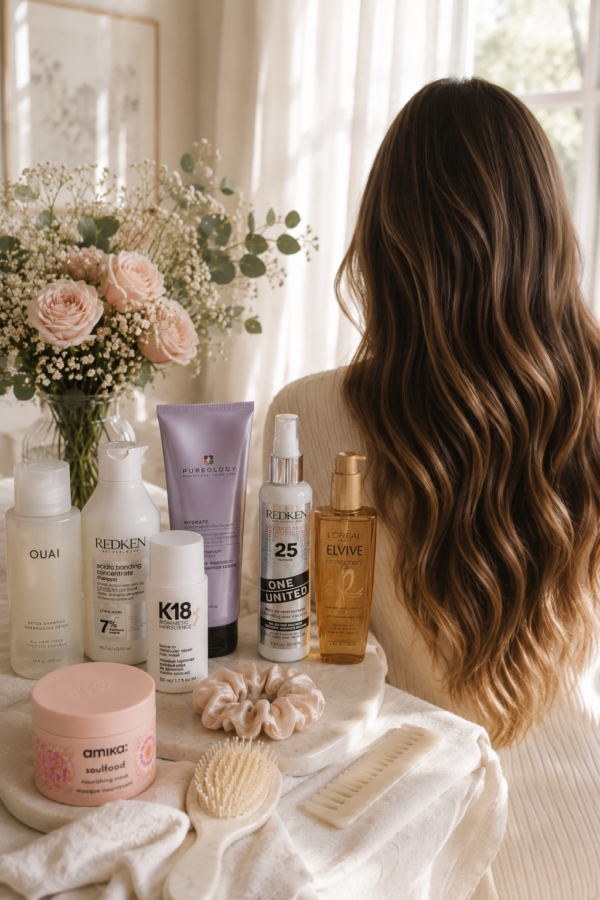
If your fine hair looks full and bouncy when you leave the house but seems to collapse before lunchtime, the problem may not be your hair. A few surprisingly common habits can make fine strands look flatter, greasier and less voluminous than they really are.
I know how frustrating fine hair can be. You wash it, carefully style it and admire your hard work in the mirror—only to find that the volume has quietly disappeared a few hours later.
The good news is that you do not need an expensive salon routine or a bathroom cabinet overflowing with products. Fine hair usually responds best to a lighter, simpler approach. A few small changes to the way you wash, condition and style your hair can make it look noticeably fuller.
Below are ten common fine hair mistakes, why they matter and what to do instead.

First, What Is Fine Hair?
Fine hair refers to the diameter of each individual strand. Fine strands are smaller in diameter than medium or coarse strands, which means they can be more easily weighed down by oils, conditioners and styling products.
Fine hair is not necessarily the same as thin hair. You can have fine hair and still have a lot of it. Thin hair usually refers to lower hair density, meaning fewer strands growing across the scalp.
Some people have both fine and thin hair, but the terms are not interchangeable. Understanding the difference can help you choose products and styling techniques that suit your actual hair type.
1. Using Shampoo That Is Too Rich
Deeply moisturizing shampoos can sound wonderfully nourishing, especially when your ends feel dry. However, formulas packed with heavy oils, butters and conditioning ingredients may leave fine hair soft but noticeably flat.
Fine hair generally does better with a lightweight shampoo that cleans the scalp thoroughly without leaving behind a heavy coating.
What to do instead
- Look for shampoos labeled volumizing, lightweight or for fine hair.
- Apply shampoo mainly to your scalp rather than piling it onto your ends.
- Rinse thoroughly, particularly around the crown and back of the head.
- If your hair still feels greasy after washing, try shampooing twice with a small amount rather than using one large handful.
Affordable options such as L'Oréal EverPure Volume Shampoo, OGX Thick & Full Biotin & Collagen Shampoo and Garnier Fructis Hair Filler may be worth considering, depending on your hair's needs.
For more budget-friendly recommendations, read The Best Drugstore Hair Products for Fine Hair.
2. Applying Conditioner Too Close to Your Scalp
Conditioner is essential for keeping the lengths of your hair soft and manageable, but applying it directly to the roots can make fine hair lose volume before styling has even begun.
Your scalp naturally produces oil, so the hair closest to it usually needs less conditioning than the older, drier ends.
What to do instead
Squeeze excess water from your hair before applying conditioner. Smooth a small amount through the mid-lengths and ends, beginning around ear level.
Leave it on for the recommended time, then rinse carefully. If your hair is especially fine or short, you may need far less conditioner than the amount shown in beauty advertisements.

3. Using Too Much Product
Fine hair can go from freshly styled to overloaded very quickly. A little extra mousse, serum, oil or leave-in conditioner may not look like much in your hand, but layering several products can make delicate strands clump together and appear thinner.
What to do instead
Begin with less product than you think you need. You can always add a little more, but it is difficult to remove excess product without washing your hair again.
- Start with a small palmful of mousse for shoulder-length hair.
- Use root spray only where lift is needed.
- Apply oils and serums to the very ends.
- Avoid layering several products that perform the same job.
For many people, one volumizing product and one finishing product are enough.
4. Putting Hair Oil Through the Lengths
Hair oil can give dry ends a lovely polished finish, but fine hair rarely needs oil distributed throughout the entire length. Applying it too close to the roots—or using several pumps—can make freshly washed hair look greasy within minutes.
What to do instead
Place one small drop between your palms and rub your hands together until only a light residue remains. Gently touch the driest ends of your hair.
If even that feels too heavy, try a lightweight shine spray or a leave-in mist designed for fine hair instead.
5. Avoiding Mousse Because You Remember the Crunchy Kind
Many of us still associate mousse with stiff, crispy hairstyles from decades past. Modern volumizing mousses are often much softer and more flexible.
Mousse can give fine strands grip and support, which helps a blowout or curled style hold its shape for longer. The key is using a lightweight formula and not applying too much.
What to do instead
Work a modest amount through damp hair, concentrating on the roots and areas where your hair tends to collapse. Comb it through lightly, then blow-dry.
If your hair feels sticky or stiff after drying, reduce the amount next time rather than abandoning mousse completely.

6. Blow-Drying Your Hair Flat Against Your Head
How you position your roots while they dry affects how much lift they retain. If you brush your hair downward and dry it in the direction it naturally falls, you may unintentionally encourage it to sit flat against your scalp.
What to do instead
- Lift sections away from your scalp while drying the roots.
- Dry your part in the opposite direction, then flip it back into place.
- Use a round brush at the crown for targeted lift.
- Allow each section to cool while it is still elevated.
You can also flip your head upside down briefly while drying, although people with frizz-prone hair may prefer lifting individual sections with a brush for a smoother finish.
7. Skipping Heat Protection
Because fine strands are delicate, repeated heat styling can leave them dry, brittle and prone to breakage. Breakage can make the ends look sparse, which may reduce the overall appearance of fullness.
What to do instead
Apply a lightweight heat protectant before using a blow-dryer, curling iron or flat iron. Choose a mist rather than a rich cream if heavier formulas flatten your hair.
Use the lowest effective temperature and avoid repeatedly passing a hot tool over the same section.
8. Trying to Stretch Wash Day Too Far
There is a great deal of pressure online to wash hair as infrequently as possible, but there is no universal wash schedule that works for everyone.
Fine hair often shows oil more quickly because there is less surface area on each strand to absorb and distribute it. Sweat, styling products and dry shampoo can also build up at the roots.
What to do instead
Wash your hair when your scalp and roots genuinely need washing. For some people, that may be every other day. For others, it may be daily or every three days.
A clean, comfortable scalp is more important than forcing your hair to follow someone else's routine.
9. Relying on Dry Shampoo for Too Many Days
Dry shampoo can be brilliant for refreshing roots and adding texture, but it is not a substitute for cleansing the scalp indefinitely.
Repeated applications can leave a powdery buildup that makes fine hair feel dull, heavy or difficult to style.
What to do instead
- Apply a light amount rather than saturating the roots.
- Allow it to sit briefly before massaging or brushing it through.
- Use it to extend a style, not to postpone washing for as long as possible.
- Cleanse thoroughly when buildup becomes noticeable.
Applying dry shampoo before bed can work well because it has time to absorb oil overnight, but you still only need a small amount.
10. Choosing a Haircut That Removes Too Much Fullness
There is no single haircut that every person with fine hair must have. However, very heavy layering can sometimes make the ends look sparse, particularly when the hair is also low-density.
On the other hand, hair that is extremely long may be pulled flatter by its own weight.
What to do instead
Ask your stylist about maintaining a strong, relatively blunt baseline while adding movement only where it will be flattering.
Haircuts that often work beautifully for fine hair include:
- A blunt bob
- A collarbone-length lob
- A shoulder-length cut with subtle face-framing pieces
- A shorter cut with gentle texture at the crown
Bring reference photographs to your appointment, but also ask whether the style will suit your hair density, natural texture and usual styling routine.
Bonus Mistake: Expecting One Product to Create All-Day Volume
A volumizing shampoo or root spray can certainly help, but lasting volume usually comes from a combination of good cleansing, careful product application and the way the hair is dried.
If a product promises dramatic results but your roots are coated in conditioner, oil or several days of buildup, it will have a difficult job.
Think of volume as a routine rather than a single miracle product.
A Simple Fine Hair Routine for More Volume
You do not need ten different products. This straightforward routine is a sensible place to begin:
- Wash the scalp with a lightweight volumizing shampoo.
- Apply conditioner only to the mid-lengths and ends.
- Blot the hair gently rather than rubbing it with a towel.
- Apply a lightweight heat protectant.
- Add a modest amount of mousse or root-lifting spray.
- Blow-dry the roots away from the scalp.
- Let the hair cool before brushing or touching it excessively.
- Finish with a light, flexible hairspray if needed.
Try changing one or two steps at a time. This makes it much easier to work out what genuinely helps your hair and what simply adds more product.

How to Make Fine Hair Volume Last Longer
Creating volume is one thing. Keeping it is often the greater challenge.
- Let your roots cool: Hair often holds its shape better when it cools in the lifted position.
- Avoid touching it constantly: Oils from your hands can transfer to your hair and separate the strands.
- Keep rich skincare away from the hairline: Face creams and sunscreen can make front sections look oily.
- Use hairspray sparingly: A fine mist is usually more flattering than soaking the hair.
- Change your part: Flipping your part to the opposite side can provide a quick lift at the roots.
Frequently Asked Questions About Fine Hair
How can I make fine hair look thicker?
A strong haircut shape, clean roots, lightweight products and root-lifting blow-dry techniques can all make fine hair appear fuller. Blunt ends may also help the bottom of the hair look denser.
Is fine hair better without conditioner?
Not necessarily. Fine hair can still become dry, tangled and damaged. The solution is usually to use a lightweight conditioner in a small amount and apply it only where needed.
Should fine hair be washed every day?
Fine hair should be washed according to the needs of the scalp and hair. Daily washing can be appropriate for some people, while others prefer every two or three days. Use a gentle shampoo and pay attention to how your scalp feels.
Is mousse or root spray better for fine hair?
Mousse often adds body throughout the hair, while root spray provides more targeted lift. Some people use both, but begin with one product so you can judge the result without overloading your hair.
Can fine hair hold curls?
Yes, although freshly washed, very soft hair may need a little grip. Lightweight mousse, texture spray and allowing each curl to cool before brushing can help the style last longer.
Does fine hair need clarifying shampoo?
A clarifying shampoo can be useful when styling products, dry shampoo or hard-water residue have built up. It does not need to be used every day. How often you clarify will depend on your products, water and scalp.
Are layers bad for fine hair?
Layers are not automatically bad, but too many can reduce fullness at the ends. Subtle, carefully placed layers may add movement without making the hair look sparse.

Final Thoughts
Fine hair is not bad hair, and it does not need to be hidden beneath endless products or complicated styling routines.
In fact, fine hair often looks its best when treated with a lighter hand: clean roots, a small amount of carefully chosen product and styling techniques that lift rather than weigh down the strands.
You may not need to replace everything in your bathroom cabinet. Begin by moving your conditioner away from the roots, reducing the amount of styling product you use or changing the direction in which you blow-dry your hair.
Sometimes the smallest adjustment makes the most noticeable difference—and beautiful, healthy-looking hair should never require an extravagant budget.