By Zach Stanley – Granite Northwest Grading & Paving
Let’s be honest—we all think about our homes a lot. The kitchen needs new cabinets, the garden could use a spruce-up, and wouldn’t it be nice to finally get around to painting that back room? But there’s one part of our homes that often gets overlooked, even though it’s one of the first things people see and one of the largest surfaces we own.
Yep—I’m talking about your driveway.
As someone who’s spent most of his life in the asphalt paving world, I get it. A driveway doesn’t exactly scream excitement the way a new kitchen or flower bed does. But here’s the thing—your driveway plays a huge role in the look, safety, and feel of your home. And when it starts showing its age, it can quietly cause problems that sneak up on you down the line.
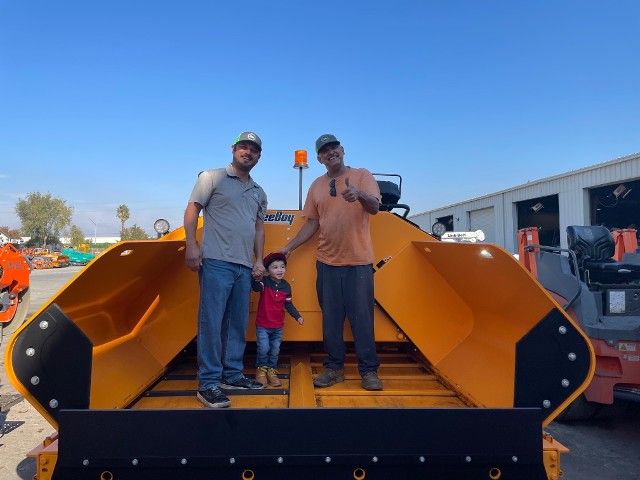
I’ve had the pleasure of working in this trade with my father and now my son too. We’ve been at this for three generations, and I like to say we do more than just lay asphalt—we help folks make smart choices for their homes. That includes clearing up confusion around one of the most common questions I hear:
“What’s the difference between resurfacing and overlaying a driveway?”
Glad you asked.

A Driveway That Just Needs a Touch-Up? That’s Where an Overlay Comes In
With an asphalt overlay, we’re not tearing everything out. Think of it like giving your driveway a fresh new coat to cover up minor cracks, wear, or fading—kind of like replacing an old rug without redoing the floor underneath.
We clean the surface, seal the little stuff, and then apply a fresh layer of asphalt right over the top. The end result? A driveway that looks brand new and drives smooth again—without the big price tag or construction hassle.
This option works great if the structure underneath is still solid and you’re just dealing with some surface-level wear and tear.
But If Your Driveway Has Seen Better Days… Resurfacing May Be the Better Call
Now, if your driveway looks more like a patchwork quilt than a smooth surface—or if water puddles up every time it rains—then an overlay likely isn’t enough.
That’s where resurfacing comes in. We start by milling down the top layer—removing all those cracks, dips, and damage—and then lay a brand new surface over a refreshed, stable base. It takes a bit more work, but the results are worth it.
Resurfacing fixes deeper issues and gives your driveway a fresh start that’ll last for years.
Not Sure What You Need? Here’s What to Look For
Let’s face it—asphalt terms can sound technical, but they don’t have to be confusing. Whether it’s an overlay, resurfacing, or a full replacement, what matters most is working with a team that takes the time to explain your options clearly and honestly.
If you're starting to think about your own driveway, my advice is simple: look for a reputable local paving company in your area—ideally one that’s been around for a while. In fact, a lot of paving companies across the country are family-run, multigenerational businesses, just like mine. You’ll often find that they take real pride in what they do, and they’ll be happy to come out, take a look, and give you some honest feedback without the hard sell.
And hey—if you happen to be in San Jose or somewhere nearby in the Bay Area, well, that’s where my family and I work. We’d be glad to help however we can.
Thanks for taking the time to read this—and for not forgetting about that all-important driveway in the middle of all the home projects. It really does make a difference.