Last Tuesday morning, I stood at the kitchen sink wrestling with our old tap while trying to rinse breakfast dishes before the school run. The handle stuck, the water pressure was inconsistent, and I'd been putting up with it for months because "fixing it" sounded like a whole project.
That afternoon, I replaced it. The entire job took less time than my usual scroll through Instagram, and suddenly washing dishes didn't feel like a battle anymore. It made me wonder how many other small irritations I'd been tolerating simply because I assumed home improvements required more time, skill, or money than I had. Turns out, quite a few. Swapping out that modern faucet for something that actually worked smoothly was the first of several tiny changes that made our daily routine noticeably easier.
I'm not talking about renovations or major projects. These are the quick fixes that take minutes but somehow make your house feel like it's working with you instead of against you.
The Tap That Finally Worked Properly
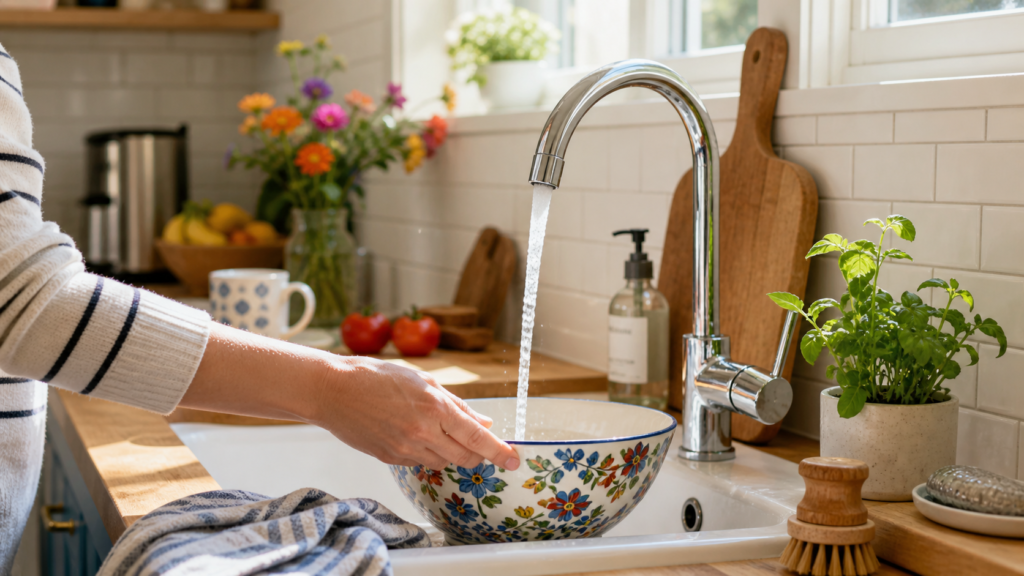
I don't know why I waited so long to replace our kitchen tap. Maybe because it technically still worked, just not well. The handle was stiff, the spray nozzle had lost most of its pressure, and every time I filled a pot, it felt like a minor negotiation.
New taps are surprisingly straightforward to install if you have basic tools. I watched one YouTube video, turned off the water supply under the sink, and had the old one out in ten minutes. The new one took slightly longer to attach, mainly because I was being cautious.
The difference showed up immediately in those repetitive daily tasks. Filling water bottles for the kids, rinsing vegetables, and cleaning up after dinner. Tasks I do dozens of times a day suddenly require less effort and attention. According to research from the National Kitchen and Bath Association, homeowners rate faucet replacement as one of the highest satisfaction upgrades relative to time and cost invested, with 84% saying it improved their daily kitchen experience.
If your tap drips, sticks, or just feels unpleasant to use, that's reason enough to replace it. You touch it constantly. It should work smoothly.
The Doors That Stopped Banging
Our bedroom door used to slam into the wall every time someone opened it quickly. There's a dent in the plasterboard from years of this happening before we moved in, and I kept meaning to do something about it.
Then I discovered that small decorative door stops exist in versions that actually look nice. Not just the ugly rubber wedges or coiled springs I remembered from my childhood. Proper ones that mount to the wall or floor and prevent doors from damaging walls while looking intentional rather than purely functional.
I installed four of them around the house in one evening while my partner put the kids to bed. Each one took about three minutes. Two screws, a wall anchor if needed, done. The bathroom door no longer hits the towel rail. The kids' bedroom door doesn't slam into their dresser. These tiny changes eliminated several small daily irritations I'd gotten so used to that I barely noticed them anymore.
A 2025 survey by HomeAdvisor found that minor hardware updates ranked among the top five home improvements people wished they'd done sooner. The effort is minimal but the cumulative effect of removing small annoyances adds up over weeks and months.
The Light Switch That Actually Made Sense
We had a light switch in our hallway that controlled nothing obvious. I'd flip it occasionally out of curiosity, never figured out what it did, and eventually stopped thinking about it.
Turns out it controlled an outlet I'd been using for a lamp, which explained why the lamp randomly wouldn't work sometimes. Once I realized this, I moved the lamp to a different outlet, and now that switch controls a small nightlight we keep plugged in for when the kids need the bathroom at night.
This isn't even a fix, just a realization that made an existing feature useful instead of confusing. Sometimes the quick win isn't replacing something but just understanding how it works and using it properly.
The Cabinet That Stopped Sticking
One of our kitchen cabinet doors never closed flush. It hung slightly crooked, and you had to push it firmly to get it to stay shut. Every single time I used that cabinet, I'd push the door, it would bounce back open, and I'd push it again with more force.
Cabinet hinges have adjustment screws. I did not know this. Three small turns with a screwdriver and the door lined up perfectly. The whole fix took less time than it takes to make tea.
I felt slightly ridiculous for not looking into this sooner. How many times had I closed that cabinet over the past two years? Hundreds? Thousands? And the solution was three turns of a screw.
The Drawer That Stopped Jamming
Our cutlery drawer jammed every third time I tried to open it. Something inside would shift and block the mechanism. I'd gotten so used to it that I developed a specific wiggle and yank technique to get it open.
The problem was one oversized serving spoon that didn't fit properly in the divider. I moved it to a different drawer. Problem solved. No tools required, no new purchases, just paying attention to what was actually causing the issue instead of working around it.
When Quick Fixes Are Worth Your Time
Not every home problem needs a quick fix. Some things genuinely require professional help or proper planning. But I've learned to distinguish between "this is annoying" and "this is actually broken."
If something in your house irritates you multiple times a week, it's worth investigating whether a simple fix exists. Five minutes of your attention now saves you from experiencing that same irritation hundreds of times over the coming year.
The calculation changes when you factor in frequency. A sticky door you use ten times a day creates more cumulative annoyance than a squeaky floorboard you step on once a week.
What You Can Fix Right Now
Walk through your house and notice what you're tolerating. The drawer that sticks. The door that doesn't close properly. The tap that drips. The light that flickers.
Most of these problems have simple solutions that don't require special skills or expensive tools. A screwdriver, some WD-40, maybe a YouTube video. That's often all you need.
I keep a running list on my phone of small house irritations. When I have twenty minutes free, I pick one and deal with it. Some turn out to be genuinely complicated and go on the "ask someone who knows what they're doing" list. But most are surprisingly quick to resolve once you actually look at them.
Frequently Asked Questions
How do you know if a home fix is actually quick or if it'll turn into a bigger project?
Look it up first. Search for the specific problem on YouTube or home improvement forums before you start. If the tutorials show the fix taking 10-15 minutes and don't require specialized tools, it's probably genuinely quick. If every video mentions potential complications or says "might need a plumber," that's your sign to get help.
What tools should you have on hand for basic home fixes?
A decent screwdriver set covers most quick fixes around the house. Add an adjustable wrench, needle-nose pliers, and a tape measure, and you can handle probably 80% of minor repairs. I keep mine in a small toolbox under the kitchen sink so they're accessible when I notice something that needs attention. Don't invest in expensive specialty tools until you know you need them. The basic kit handles more than you'd expect.
Is it worth replacing hardware that still works but just looks dated?
If it functions fine and doesn't bother you, leave it. But if you actively dislike looking at it or using it, the cost and effort to replace basic hardware is low enough that "it still works" isn't necessarily a good reason to keep it. I replaced our bathroom cabinet pulls last year, even though they worked perfectly, because they felt cheap every time I touched them. The new ones cost £15 and made me happier every day. Sometimes, small upgrades are worth it purely for how they make you feel about your space.
What should you tackle first if you have a list of small fixes?
Start with whatever annoys you most frequently. The bathroom door that sticks and you use five times a day takes priority over the guest room curtain rod that's slightly loose. You'll feel the benefit immediately with high-frequency problems, which makes you more likely to tackle the next item on the list. I also start with fixes that don't require buying anything, just adjusting or reorganizing what's already there. Those give you quick wins that build momentum.
Making Your House Work Better
The best home improvements aren't always the big, dramatic renovations. Sometimes they're the small fixes that remove friction from your daily routine.
Your house should support how you actually live, not create extra work or irritation. When something bothers you regularly, fix it. Most of the time, it's easier than you think.