
London is a city that shows its history through buildings. You can walk a few streets and move from medieval stone to sharp glass towers without thinking much about it. That mix is what makes the city so vibrant and truly brings London to life. Some structures feel familiar, others feel bold, and many sit somewhere in between. Each one tells a story about the time it was built and the people behind it.
This article focuses on a handful of buildings that are worth your time and attention for their stunning design and impact on your next visit to London. Keep reading to see which ones stand out most and why they matter.
The Shard
The Shard is hard to miss; it rises above the skyline and changes how London looks from almost any angle. Designed by Italian architect Renzo Piano, the building uses glass to reflect light and weather, so it never quite looks the same twice. Some days it blends into the sky, and other days it stands out sharply. The design was meant to feel like a shard of glass rising from the ground, and that idea holds up when you see it in person.
The construction was actioned by London construction experts Mace Group who turned the concept into something real. Inside, the building boasts offices, restaurants, and living spaces, which makes it more than just a viewing point. The engineering had to deal with wind, height, and weight, all while keeping the structure stable. It’s not just tall for the sake of it; it shows how modern design can still fit into a historic city without copying the past.
St Paul’s Cathedral
St Paul's Cathedral is one of the clearest examples of classical architecture in the city. Designed by Christopher Wren, it has stood for centuries and still feels solid and calm. The dome is the main feature, and it dominates the skyline in a quieter way than modern towers. It’s detailed but not overwhelming, and that balance is part of why it works so well.
The cathedral was rebuilt after the Great Fire of London, which gave Wren the chance to rethink the design completely. Builders and craftsmen worked over decades to complete it, using stone and careful planning rather than speed. Even now, restoration teams and heritage organisations help keep it in good condition. To learn more, tourists and curious locals alike can visit the London Museum for a full exploration of the history of this monumental piece of London architecture. The building shows how structure, symmetry, and patience can create something that lasts far beyond its time.
PwC Building, Embankment
PwC Building Embankment is a recent addition to London’s architectural scene that earns daily attention for its magnificent design. Located along the Thames, the building focuses on clean lines and a strong interior layout. The project involved collaboration between developers and design specialists, including contributions from firms like SAS International, who worked on key interior elements.
One standout feature is the use of acoustic ceilings. These help to control sound in open spaces, making the environment more comfortable to exist in. They also contribute to the overall look, blending function with design rather than hiding it. The ceilings were carefully integrated to ensure they match the building’s modern feel. It’s a good example of how small design choices can improve how a space works day to day, not just how it looks.
The British Museum
British Museum brings together old and new architecture in a clear way. The original building, designed by Robert Smirke, uses a classical style with columns and symmetry. It feels formal and grounded. But the Great Court, redesigned by Norman Foster and his firm Foster and Partners, adds a modern glass roof that changes the space completely.
The glass ceiling covers the central courtyard, letting in natural light and opening up what used to be a closed area. The contrast between the old stone and the new structure works well because neither tries to copy the other. Engineers had to solve complex problems to make the roof sit properly over the irregular space. The result is practical and visually clear. It shows that historic buildings can be adapted without losing their character.
Tower Bridge
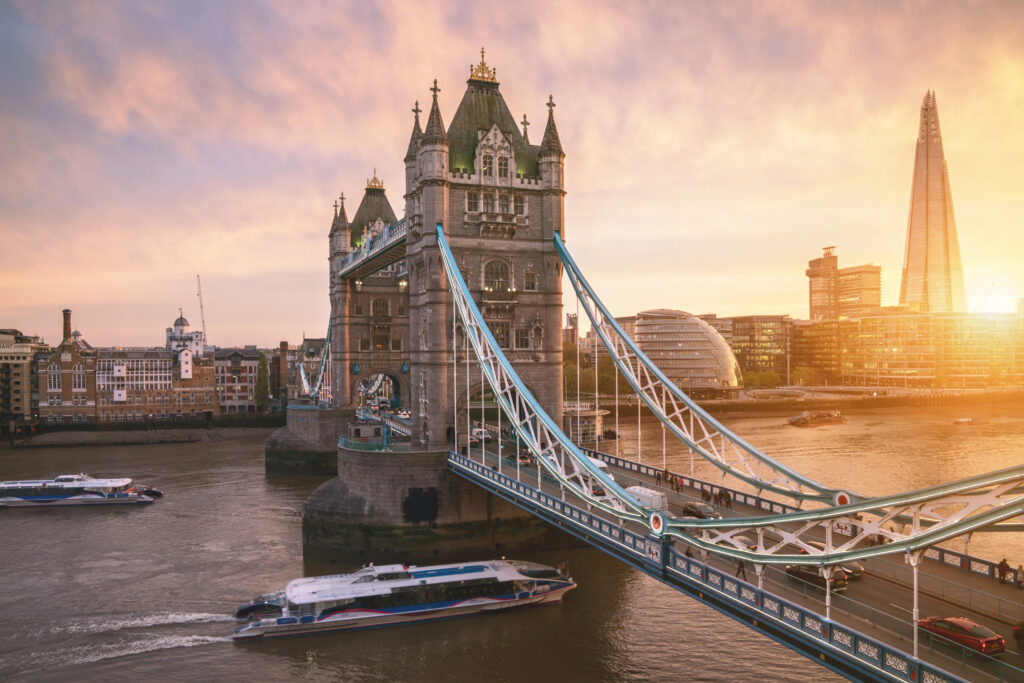
Tower Bridge is often confused with London Bridge, but it stands out on its own. Built in the late 19th century, it combines function with a distinctive look. Designed by Horace Jones and engineered by John Wolfe Barry, it was created to allow ships to pass while keeping road traffic moving. The lifting bascules still operate, which makes it more than just a static landmark.
The bridge uses a mix of steel and stone cladding, giving it strength while maintaining a traditional appearance. Construction companies and engineers worked with the technology available at the time, which makes the result even more impressive. Today, it’s maintained by city authorities and continues to handle traffic daily. It shows how infrastructure can also be visually striking, not just practical.