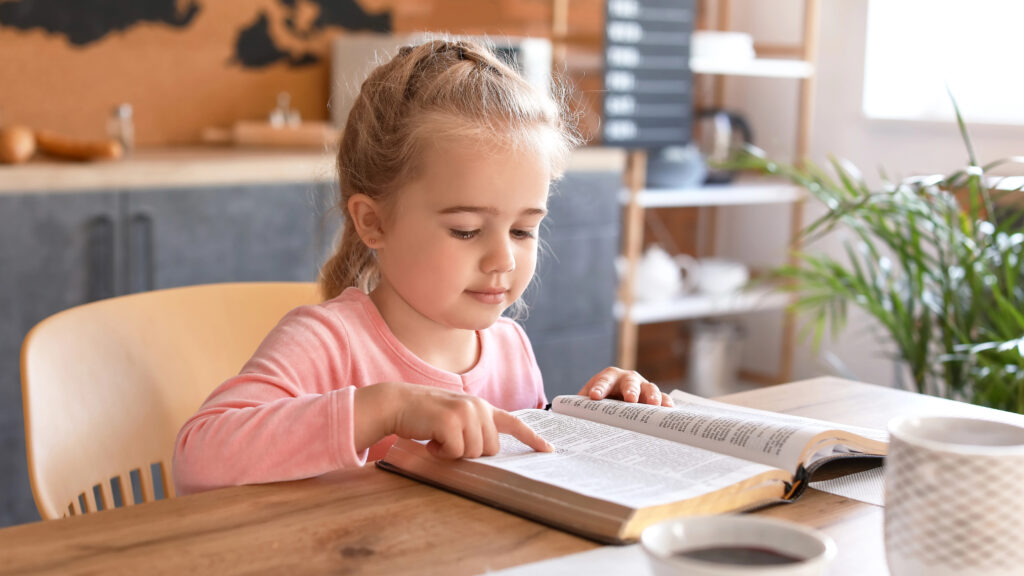
Picking a Bible for your child feels like a big decision, and it is. The right copy can spark curiosity, build confidence, and turn quiet reading time into a lasting habit of faith.
Know Your Child's Age and Reading Level
Start by thinking honestly about where your child is right now. A four year old needs something very different from a twelve year old, and matching the Bible to their stage makes reading feel welcoming.
Toddlers and preschoolers do best with board book style storybook Bibles. Short stories, bright illustrations, and simple questions help little ones connect with characters like Noah, David, and Mary without feeling overwhelmed.
Early elementary readers are ready for fuller storybook Bibles with more text. Look for clear print, short chapters, and stories arranged in order so your child begins to see how Scripture fits together.
Upper elementary and middle school students can usually handle a full Bible written in modern language. At this stage, they want a book that feels real, not one that looks like a toy.
Teenagers often appreciate a study Bible with notes, maps, and background articles. These extras answer the hard questions teens ask, and they show that faith can stand up to curiosity and doubt.
Find a Bible Translation That Matches Your Family's Faith
If Spanish is spoken in your home or church, you can order Spanish Bibles here that carries extra weight. The translation you pick should feel natural to your child and stay faithful to the beliefs your family holds.
The Reina Valera is the most familiar Spanish Bible, and many Protestant and evangelical congregations have used it for generations. Its revisions, such as Reina Valera 1960 and Reina Valera 1995, sound traditional and dignified.
For younger readers, consider the Nueva Versión Internacional or the Traducción en Lenguaje Actual. Both use everyday Spanish, which helps children understand what they read without stumbling over older words and phrases.
Talk with your pastor, priest, or children's ministry leader before buying. They know which translation your congregation uses, so your child can follow along on Sunday and memorize verses that match what everyone reads.
Compare Translation Styles Before You Buy
Every Bible translation follows a philosophy, and knowing the difference helps you shop with confidence. Some stay close to the original Hebrew and Greek words, while others focus on carrying the meaning into language.
Word for word translations, such as the English Standard Version or the New American Standard Bible, offer precision. They work well for older students who enjoy careful study, though the phrasing can feel stiff.
Thought for thought translations, like the New Living Translation and the New International Reader's Version, read smoothly. Younger children often understand them faster, which keeps frustration low and encourages them to keep turning pages.
Denominational background matters here too. Some churches prefer a particular English translation, so ask which version your Sunday school teachers use, since matching the classroom text helps your child memorize and discuss verses confidently.
Try a simple test in the store or online. Ask your child to read John 3:16 aloud from two or three versions, then ask which one sounded clearest and which one they enjoyed most.
Sample reading also reveals whether the text size, page layout, and paper quality suit your child. A Bible that looks crowded or feels awkward to hold often ends up unused on a shelf.
Look for Features That Keep Your Child Engaged
Helpful features can turn a good Bible into a great one. Illustrations, timelines, maps, and short devotionals give your child context and invite them to stay with a passage longer than they normally would.
Reference features deserve attention too. Cross references, a simple dictionary, and character profiles help a curious child follow a story from one book to another without always needing you nearby.
Durability matters more than parents expect. A hardcover or flexible leather style cover survives backpacks, car rides, and bedtime reading, and a ribbon marker or wide margins make it easier to return to favorite passages.
Budget deserves a moment of thought as well. Children grow quite quickly, so a mid range Bible that lasts several years often serves better than an expensive edition they may outgrow.
Personalization adds meaning. Having your child's name printed on the cover, or leaving space for a family message inside the front page, makes the Bible feel like a personal gift instead of a purchase.
Be careful not to let extras overshadow the text itself. Bright graphics and games can distract, so choose features that point your child back to Scripture rather than away from it.
Make the Bible a Shared Family Habit
Even the perfect Bible cannot work alone. Children learn faith by watching you, so let them see you open your own copy, ask questions, and talk about what a passage means for your week.
Set a short, steady routine that fits your household. Ten minutes at breakfast or before bed, with one story and one question, builds a rhythm that a child can look forward to.
Let your child take part in the choice itself. When a daughter or son helps pick the cover, the translation, and the reading plan, they feel ownership and are far more likely to open it.
Encourage questions without rushing to answer everything. When your child asks why a story happened or what a verse means, explore it together, and admit when you need to look something up.
Celebrate milestones along the way. A baptism, a first communion, a birthday, or the start of middle school can be a perfect moment to present a new Bible with a handwritten note inside.
Final Thoughts
Choosing a Bible is really about meeting your child where they are. Consider their age, your family's tradition, the translation style, and the features that spark interest, and trust your instincts as a parent.
The best Bible is the one your child will actually open, read, and return to. Start with a thoughtful choice today, and watch a lifelong faith journey begin one page at a time.