A tea table mat is a decorative and functional textile or woven piece placed beneath teaware and tea accessories during tea preparation. It serves as a foundation for your tea nook, helping organize the space while enhancing its texture and character.
Although it may seem like a small detail, a tea table mat can greatly influence both the look and practicality of a tea nook. It protects the table from water, tea stains, scratches, and hot teaware, while also helping cups, teapots, trays, and tea accessories feel more visually connected.
The right mat should not be chosen only because it looks beautiful. It needs to fit the size and style of your tea table, suit the way you prepare tea, match your teaware, and remain practical for daily use. Whether you enjoy traditional gongfu tea, a quiet afternoon tea ritual, or simply want to arrange a small tea corner at home, choosing the right tea table mat can make the entire tea nook feel more organized and comfortable.
Start With the Size of Your Tea Table
The size of your tea table is the first thing to consider when choosing a mat. The right size not only improves the overall appearance of the tea space but also affects how comfortable it is to prepare and enjoy tea. Different tea tables require different approaches.
For a small tea table or a Japanese-style tea table, a compact mat is usually enough. These spaces often focus on simplicity and balance, so a smaller mat placed under the main tea setup can define the tea area while keeping the original character of the table visible.
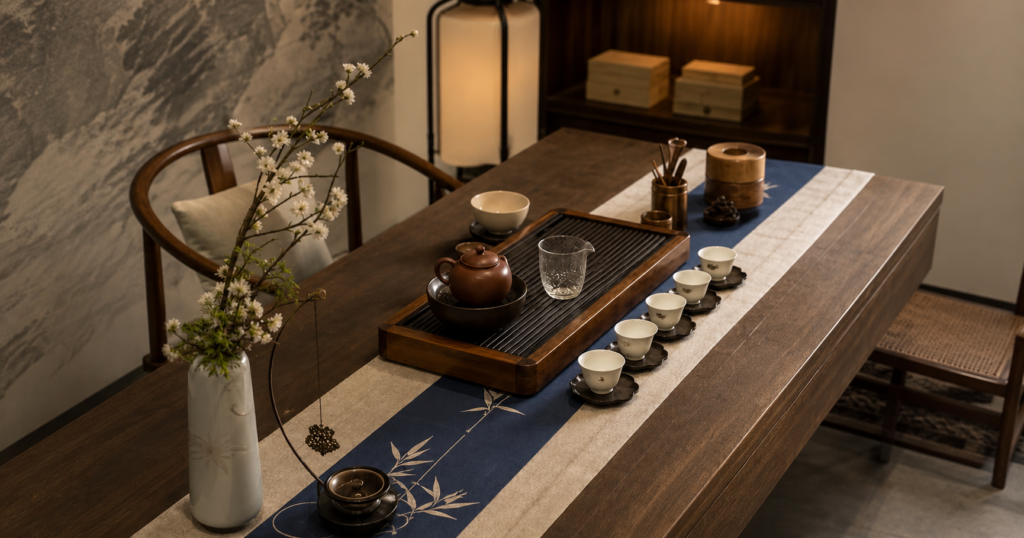
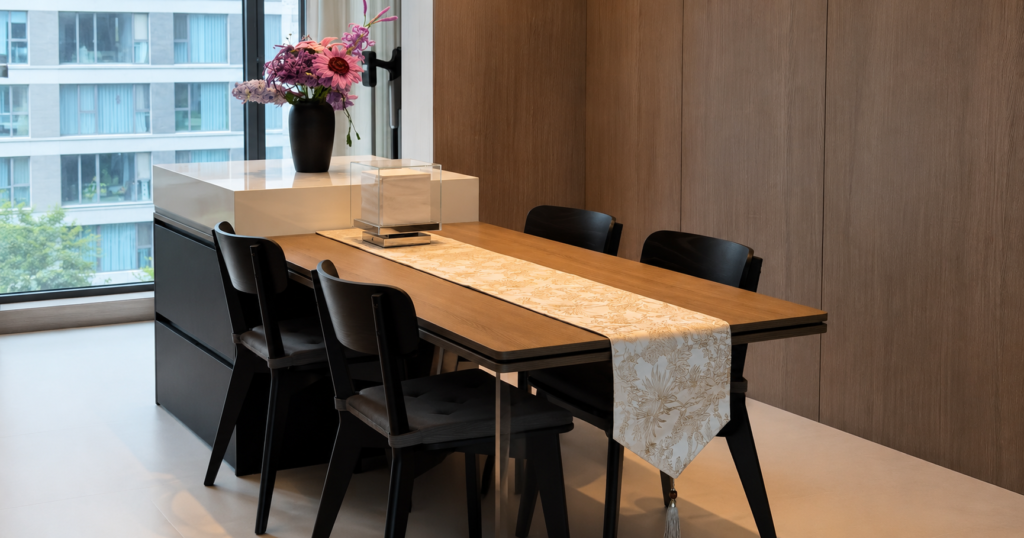
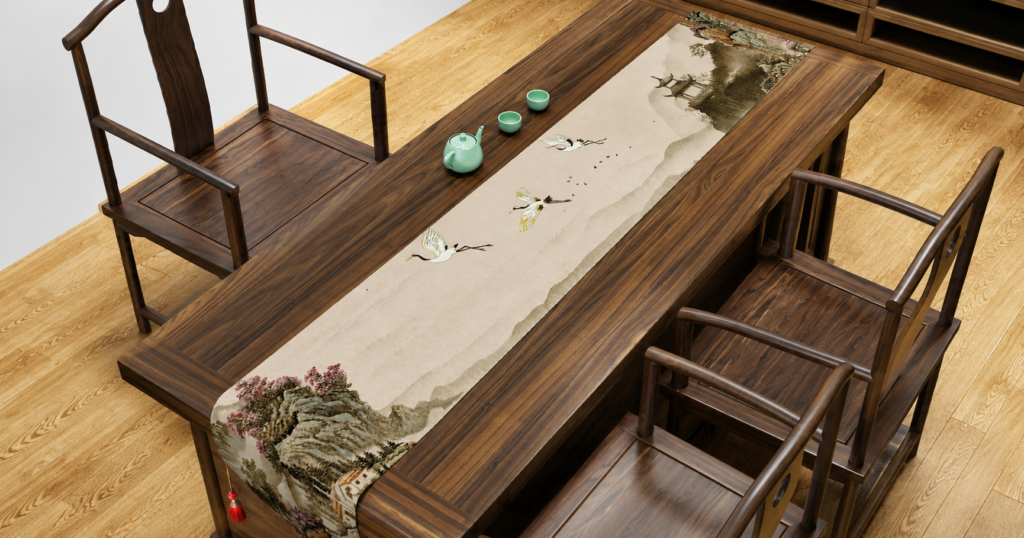
For a larger Chinese tea table, especially a long rectangular table used for gongfu tea, a longer mat or runner-style mat is often more suitable. It provides enough space for the teapot, cups, tea tray, kettle, and other tea accessories while creating a more complete and organized arrangement.
Before choosing a size, consider how you normally use your tea table. Arrange your everyday teaware on the surface first, then choose a mat that covers the main working area without making the table feel crowded. For rectangular tables, if you prefer a mat that hangs over the edges, you can use this simple calculation:
Tea table mat length = Table length + (Desired drop length x 2)
For example, if your tea table is 120 cm long and you would like the mat to extend 15 cm beyond each end:
120 + (15 × 2) = 150 cm
A mat around 150 cm long would provide a balanced overhang.
However, a hanging style is not always necessary. A smaller tea corner may benefit from a compact tabletop mat, while a longer tea table can be complemented by a runner-style design that defines the main tea area. The ideal size should balance beauty and usability. The mat should support the tea arrangement while leaving enough space for comfortable movement and daily tea preparation.
Choose the Right Material for Your Tea Lifestyle
After considering the size, the next step is choosing a material that fits your tea habits. Different materials offer different textures, levels of protection, durability, and maintenance requirements.
· Cotton & Linen: Natural, soft, and understated, cotton and linen mats create a relaxed feeling that works especially well with wooden tables and handmade teaware. With special treatments, some cotton and linen fabrics can provide water-resistant protection, allowing small spills to be easily wiped away during daily tea preparation. Even when deeper cleaning is needed, these materials are generally easy to wash and quick to dry, making them a practical choice for everyday tea spaces.
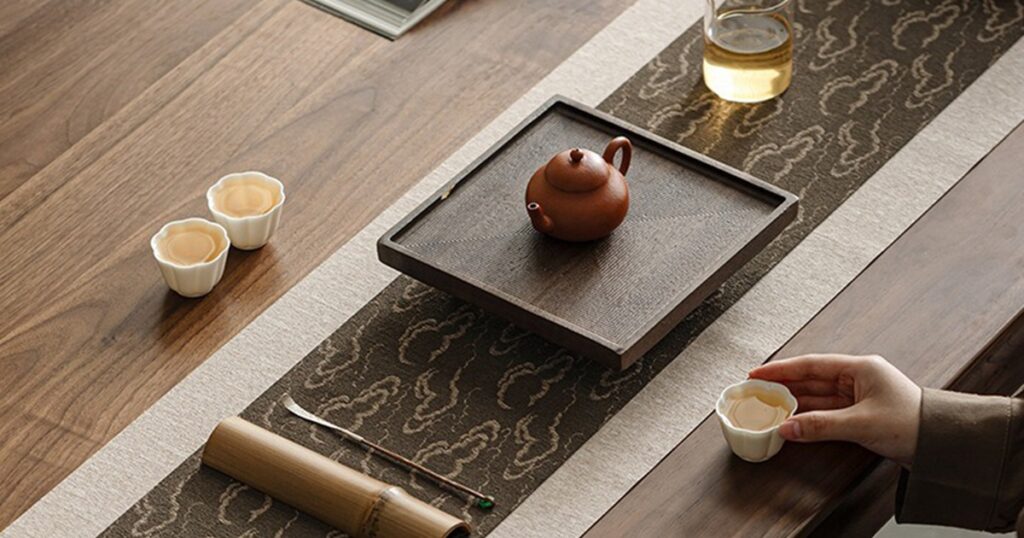
· Bamboo: Bamboo provides a firm, natural surface with a simple connection to nature. It pairs beautifully with wooden furniture and traditional tea settings, making it a good option for those who prefer a more structured and organic look. Bamboo is also relatively easy to maintain. It can usually be cleaned by simply wiping the surface, or rinsed with water and left to dry completely after use.
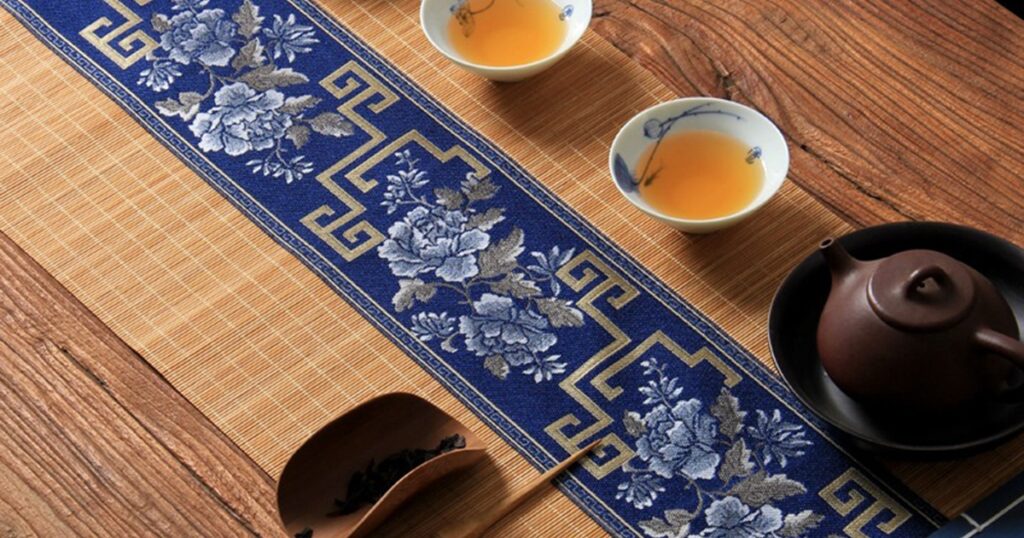
· Brocade & Woven Fabrics: Woven fabrics and brocade add richness and traditional character to a tea setting, making them ideal for spaces where decorative details are appreciated. These materials work especially well for traditional tea rooms, guest gatherings, or spaces where presentation is an important part of the tea experience. Their detailed designs may require more careful maintenance compared with simpler materials.
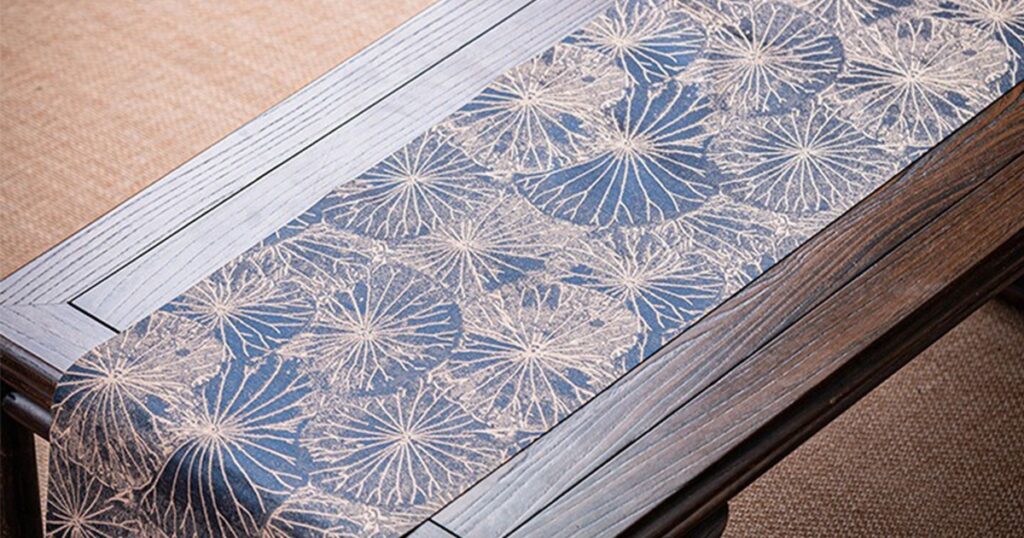
· Water-Resistant Materials: For frequent tea preparation, water resistance is an important advantage. Gongfu tea often involves rinsing cups, warming teapots, and handling water throughout the process. A water-resistant mat makes small spills easier to manage and helps protect the tabletop during daily use.
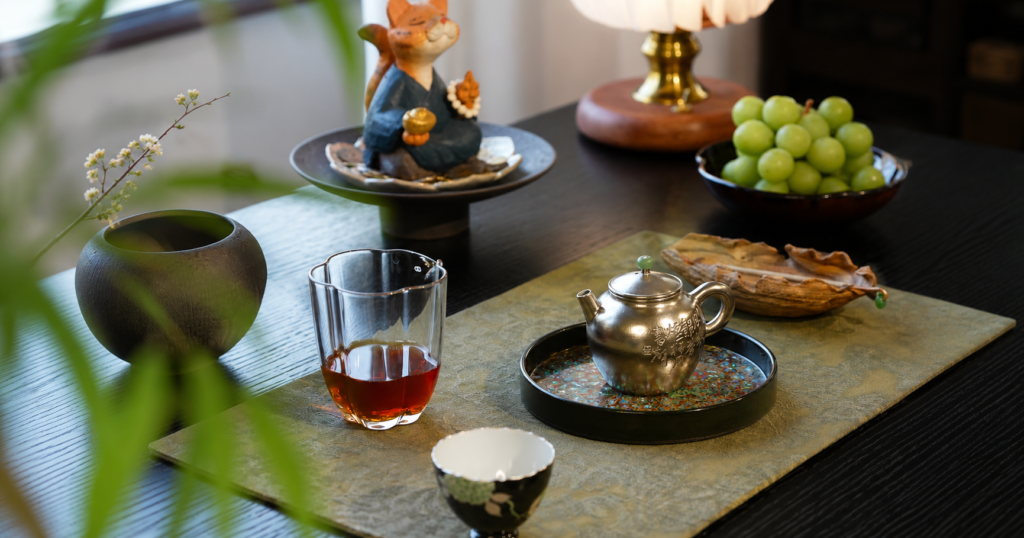
· Suede & Soft Textures: Soft materials such as velvet or suede fabrics add a refined and comfortable feeling to the tea setting. Their smooth texture creates a beautiful contrast with porcelain, ceramic, and glass teaware, especially on stone, glass, or darker tables. Suede materials also offer good water resistance. Their natural weight and drape allow them to sit closely on the tabletop without easily shifting, while their smooth surface makes cleaning simple and convenient.
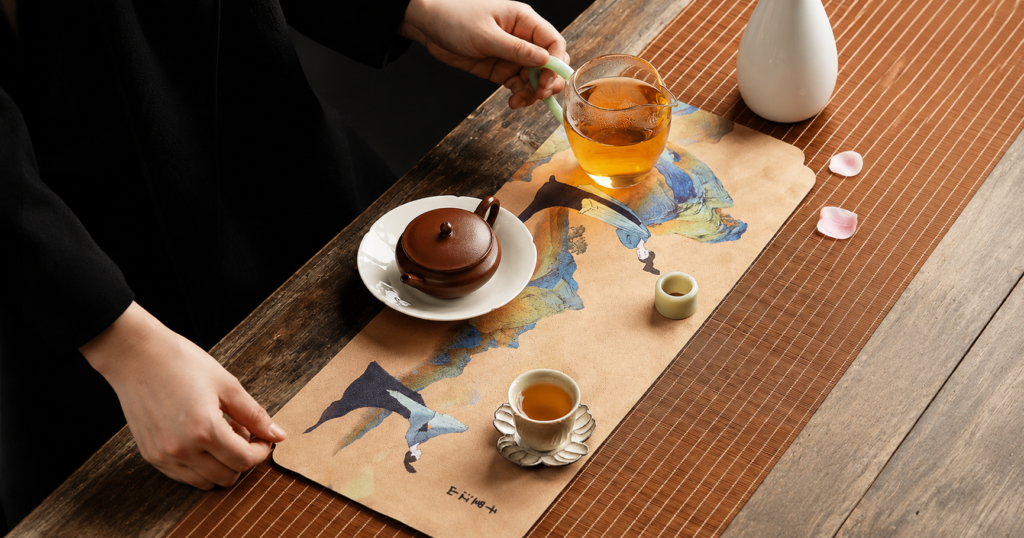
There is no single material that works best for every tea space. The right choice depends on how you drink tea, how much maintenance you prefer, and the atmosphere you want to achieve.
Match the Mat With Your Tea Table and Teaware
The relationship between the mat, table, and teaware plays an important role in achieving a balanced tea setting.
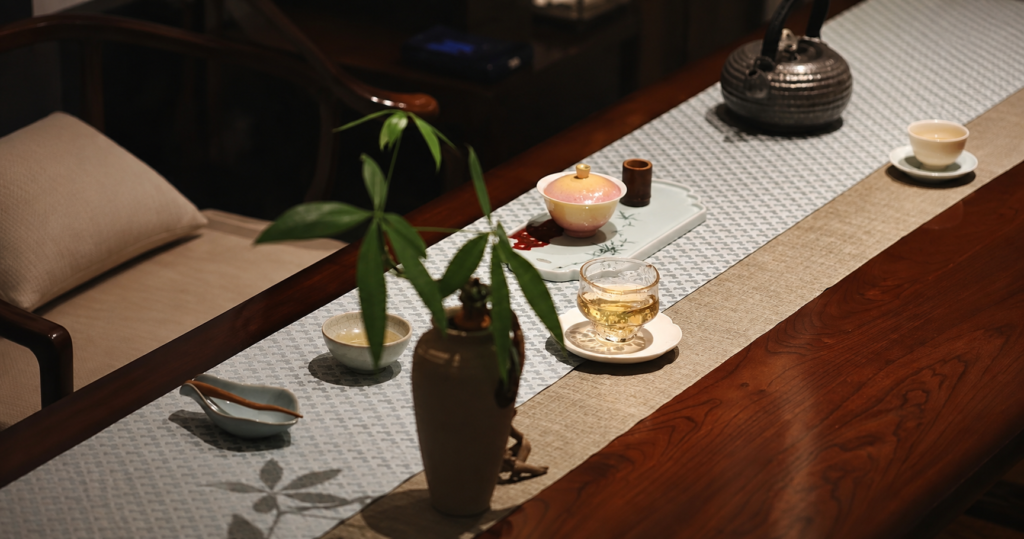
For wooden tea tables, natural textures and soft materials usually form a harmonious combination. Linen, cotton, bamboo, and woven fabrics can enhance the warmth of wood while maintaining a calm and natural feeling. Tables with strong wood grain often pair well with textured mats, while smoother surfaces may look better with simpler designs.
For stone, marble, or glass tables, a softer textile mat can soften the cool feeling of these materials and create a more balanced look. It also provides a comfortable surface for placing porcelain, ceramic, and glass teaware.
When matching a mat with teaware, contrast and balance are important. Dark-colored teaware can stand out beautifully against a lighter background, while light porcelain often looks more refined on darker or textured surfaces. Earth-toned clay teapots naturally pair well with natural fabrics and bamboo textures, while white porcelain and delicate ceramics can be highlighted by a more contrasting mat.
Consider the Pattern and Craftsmanship of the Tea Table Mat
Besides material and function, the decorative details of a tea table mat can further define the character of a tea space. A well-designed mat is not only a practical layer for protecting the table but also an element that enhances the texture, cultural character, and visual harmony of the tea setting.
For bamboo and natural woven mats, embroidered details can add elegance while maintaining a close connection with nature. Floral patterns such as orchids, plum blossoms, and crane-inspired designs bring a gentle and refined feeling to the tea table. These styles are especially suitable for Asian-inspired tea spaces, where natural materials and traditional craftsmanship create a calm and harmonious atmosphere.
For soft fabric mats such as suede and brocade, traditional patterns and artistic designs offer a refined decorative element for the tea table. Suede mats with traditional Chinese painting-inspired designs, such as mountains, rivers, and ink-wash landscapes, evoke a sense of tranquility and cultural depth in the tea space. Brocade fabrics, with their rich textures and traditional woven patterns, add a classic and elegant touch, making them suitable for carefully arranged tea settings or guest tea sessions.
Choosing a tea table mat is not simply about finding a beautiful pattern. It is about finding the right balance between appearance, protection, comfort, and practicality.
Start with the size of your tea table, choose a material that matches your tea habits, and consider how the mat works with your furniture and teaware. A well-chosen tea table mat may be a small part of the tea nook, but it can quietly enhance the entire tea experience by bringing together the table, teaware, and surrounding space in a more harmonious way.