
Back pain caused by spinal fractures can make even simple movements feel difficult. For many patients, kyphoplasty is a minimally invasive option that helps relieve pain and restore spinal stability. In busy healthcare settings like NYC, this procedure is often considered for patients seeking quicker recovery and effective pain relief.
However, not everyone is an ideal candidate for kyphoplasty. Several medical and lifestyle factors influence this decision. From the cause of the fracture to overall bone health, each element plays a role.
Below are five key factors doctors consider before recommending kyphoplasty.
1. Severity of Pain and Impact on Daily Life
One of the most important factors in determining whether kyphoplasty is suitable is the severity of pain from the vertebral compression fracture. Severe pain can significantly interfere with daily activities, including standing, walking, bending, or even sleeping. Kyphoplasty is generally considered when pain is persistent and does not improve with rest, medications, or physical therapy. Patients whose discomfort is mild or manageable often respond well to conservative treatments, making surgery unnecessary. Evaluating functional impact is essential to determine candidacy.
2. Age of the Fracture
Research shows that vertebral fractures respond best to treatment when addressed early, typically within 6–8 weeks, while the bone is still receptive to stabilization and vertebral height restoration. During this critical period, kyphoplasty in NYC offers the most predictable results. Fractures that have already healed in a collapsed position may respond less effectively, highlighting the importance of timely assessment to determine the most appropriate and effective treatment plan.
Spine specialists often emphasize the importance of determining whether a fracture is still active or has stabilized, and clinicians like Dr. Michael Gerling note that this assessment plays a key role in deciding candidacy. Advanced imaging and clinical evaluation help identify patients most likely to benefit while minimizing risks, thereby supporting safer and more informed decision-making.
3. Underlying Cause of the Fracture
Kyphoplasty is most commonly used to treat fractures caused by osteoporosis, a condition that weakens bones and makes them prone to collapse. Physicians also evaluate fractures resulting from minor trauma, falls, or certain medical conditions that affect bone strength.
Identifying the underlying cause is important, as fractures caused by infections, tumors, or other spinal pathologies may require alternative treatments. Determining the origin of the fracture ensures the procedure is appropriate, safe, and more likely to relieve pain and restore spinal stability.
4. Degree of Spinal Compression
The extent of vertebral collapse is another critical factor in kyphoplasty candidacy. Compression fractures often cause the front portion of the vertebra to collapse, creating a wedge shape that can alter posture and spinal alignment.
Kyphoplasty is recommended when there is significant loss of vertebral height, postural changes, or ongoing pain due to the compression. By inflating a small balloon and stabilizing the vertebra with bone cement, the procedure can help restore height, improve spinal alignment, and reduce pressure on surrounding nerves and tissues.
5. Overall Health and Surgical Readiness
Although kyphoplasty is minimally invasive, a patient’s overall health must be evaluated before proceeding. Factors affecting eligibility include the ability to tolerate anesthesia, the absence of active infections, the absence of severe bleeding disorders, and stable cardiovascular and respiratory function. Older adults often qualify because the procedure involves small incisions and a relatively short recovery period. However, a comprehensive medical assessment is essential to ensure the patient can safely undergo surgery and benefit from vertebral stabilization, pain relief, and improved mobility.
Who Makes a Good Kyphoplasty Candidate?
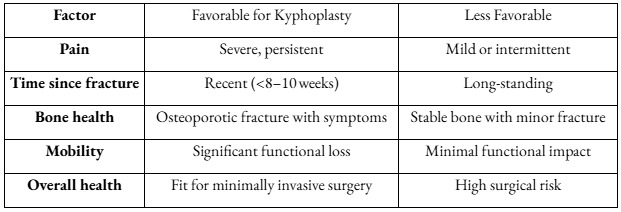
To better understand who is most likely to benefit from kyphoplasty, it helps to look at key patient factors side by side. The table below summarizes the main criteria that specialists evaluate when determining candidacy, highlighting which conditions favor the procedure and which may make alternative treatments more appropriate.
Bottom Line
Kyphoplasty can significantly improve the quality of life for people suffering from painful vertebral compression fractures. Studies indicate that many patients experience rapid pain relief and improved mobility after the procedure. Its success depends on factors such as the age of the fracture, severity of symptoms, bone health, mobility, and overall medical condition.
For those experiencing persistent back pain after a spinal fracture, consulting a qualified spine specialist can help determine whether kyphoplasty is the right treatment option. Early evaluation often leads to better outcomes and faster recovery.