
Dealing with a fire or heavy smoke can be overwhelming, but so can seeing your once-beautiful carpet covered in soot and smelling like smoke.
It’s definitely frustrating, but don’t let it get you down. You still have a lot of options to remedy the situation.
This guide will help you tackle the problem head-on and bring your floor coverings back to life.
Act Quickly
First things first, if your carpet still contains hot spots, use a fire extinguisher rather than attempting to stamp them out. It’s the safer choice.
Next, get some fresh air flowing by opening windows on opposite sides of the room to create a cross-breeze. This will help push out the smoke and bring clean air in.
Run your HVAC system on the “fan only” mode to help circulate air, but first, check that the filters are clean. Replace them if they look dirty or show any signs of residue.
For smaller mats or rugs, carefully roll them up and take them outside. The first 24-48 hours are quite important to prevent permanent damage.
A quick response means better chances of saving your carpet and avoiding those hefty costs if replacement is in the cards.
Assess the Situation
Now that the danger is out of the way and everything has cooled down, take a breath and look around.
Grab your phone or a bright flashlight. Start your inspection at ground level, running your fingers gently across the surface to feel for rough or brittle areas. These texture changes often indicate heat damage that's not visible to the naked eye.
Focus especially on corners and under furniture where soot particles love to hide. Your best bet is to document everything with clear, well-lit photos and take close-ups of deteriorated areas alongside a ruler or coin for scale.
Don't forget to photograph the zones beneath baseboards and around air vents where smoke damage commonly hides.
Moreover, you should test different areas of your carpet by gently pressing a clean white cloth against the fabric. If you spot yellowish or brown transfer on the cloth, you're dealing with lingering residue that requires your immediate attention.
What you find will help you decide what to do next. For light residue confined to surface fibres, DIY fixes are often sufficient.
However, if you’re unlucky and discover deep discolouration, strong odours, or melted fibres, it's time to call in professional carpet cleaning experts to give you a hand.
DIY Cleaning Techniques
Your kitchen cupboard might just be your secret weapon right now. For minor to moderate smoke damage, some tried-and-true homemade fixes can work wonders, and you won’t spend a fortune.
Before you roll up your sleeves, make sure the space is well-ventilated and gather everything you’ll need.
Baking Soda to Battle Odours
Let’s start with something simple and greatly effective—good old baking soda. You probably have a box of it sitting in your kitchen already, and it works wonders when it comes to pulling those stubborn smoke smells out of your carpet.
Begin by giving the affected area a good vacuum to clear out any loose debris. Then, sprinkle a generous layer of baking soda over the smelly spots. Don’t be shy here! You want enough to really coat the surface.
Leave it alone for at least eight hours (overnight is even better). During that time, the powder will go to work absorbing odours instead of just covering them up. If you want to give it a little boost, gently brush it into the fibres with a soft-bristled brush.
When you’re ready, vacuum it all up and go over the area a few times to make sure you’ve picked up every last bit. Still noticing a lingering scent? No problem. Just repeat the process a couple more times. You’ll likely notice the smell fading with each round.
Vinegar and Water Solution to Tackle Stains
Next up: stains and sticky residue. If your carpet is looking a little worse for wear in particular spots, grab some white vinegar and warm water. Mix them in equal parts in a spray bottle, and voilà—you’ve got a natural cleaning solution that breaks down smoke grime like a pro.
Before you go full throttle, do a quick spot test on an inconspicuous area. Wait about a day to make sure it doesn’t mess with the colour.
If all looks good, spray the solution lightly over the stained parts. Don’t soak the carpet. You just need to dampen it enough to start breaking things up. Then, grab a clean white cloth and blot gently, working from the outside in. This helps prevent the stain from spreading.
If you’re facing a particularly stubborn stain, try making a paste with three parts baking soda and one part of your vinegar mix. Dab it on the trouble spot, let it dry completely, and vacuum it up. This combo adds a little extra cleaning power without being too harsh.
Steam Cleaning
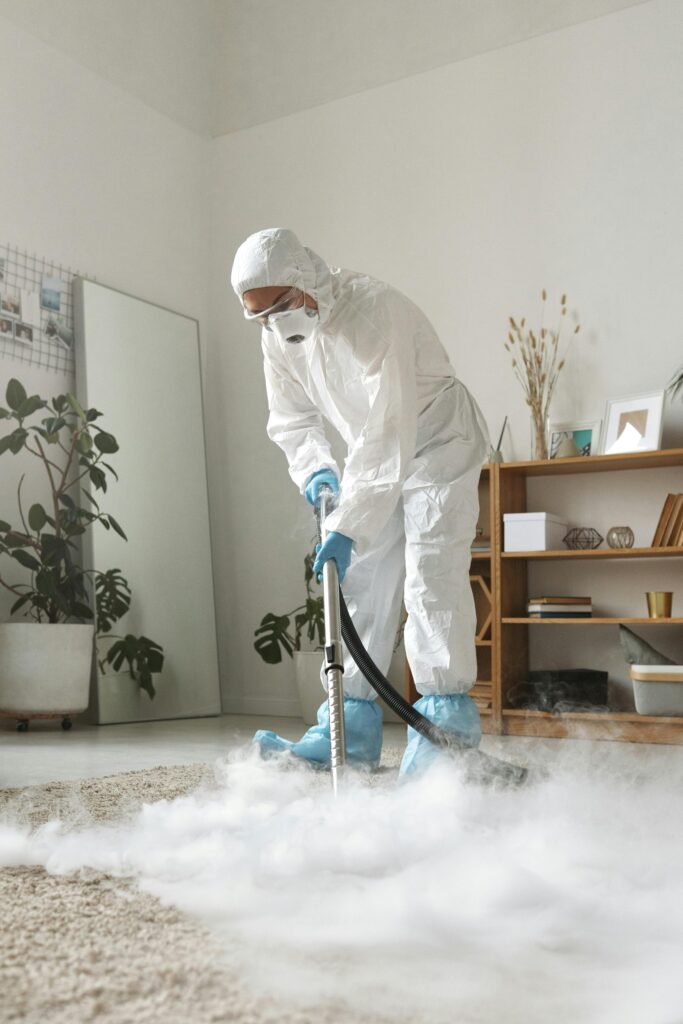
For carpets that are still hanging on for dear life to smoky smells or deeply embedded soot, it might be time to bring in the big guns. That’s a good old steam cleaning session. This method combines heat, moisture, and suction to remove embedded particles and odours.
You can rent a steam cleaner from most hardware stores, and it’s a smart move if your carpet has been through a lot. Just be sure to vacuum first to remove loose debris and double-check that your carpet is dry and free of any leftover cleaning products.
Before tackling the entire room, give the machine a trial run on a hidden patch of carpet to make sure everything reacts well to the heat and moisture.
Then go slow and steady. Use overlapping passes to lift out smoke particles and grime. If you can, use a cleaning solution that’s made specifically for smoke or fire damage. Some of these include enzymes that really dig into the mess and neutralise lingering odours.
While you’re working, keep the space well-ventilated. Leave windows open and fans running to speed up drying and prevent any excess moisture from turning into mould.
Professional Carpet Cleaning Options
Sometimes, no matter how hard you scrub or how many home remedies you try, the damage just runs too deep. That’s when it’s time to call in the pros, as they use tools and tricks that go way beyond what you’ll find at your local hardware store.
These folks roll up with heavy-duty, truck-mounted machines that mean business. We're talking high-powered systems that keep the water hot and the pressure just right, all the way through the cleaning process.
That combo helps them lift out grime, soot, and smells much more effectively than other rental machines can manage.
On top of that, their deodorising game is on point. Instead of just covering up the smell of smoke, these products they use actually break down the odour at the molecular level. It’s guaranteed that your carpet will stay fresh for much longer than just a day or two.
But here’s the thing: not all cleaning companies are created equal. You’ll want to find people who really know their way around fire and smoke damage, as opposed to just general carpet cleaners.
Before booking, ask to see some photos of their past work to get a feel for what they can do. And don’t forget to compare quotes from a few different local places. A little research upfront can save you money and headaches down the line.
Insurance and Financial Considerations
Understanding your insurance coverage can turn a stressful situation into a manageable process. Take time to review your policy details so you know exactly what support to expect during fires.
Document everything meticulously with photos and keep all cleaning receipts. This paperwork will significantly ease the claims process. Chat with your insurance agent about specific coverage details and claim procedures.
You can also look for additional support options like local assistance programs. These resources provide extra help during challenging times.
Preventing Future Mishaps
After you've taken care of your carpets, it's time to design a strong fire safety strategy that suits your home.
First, you need to consider installing photoelectric smoke detectors in each bedroom and your living room. They're brilliant at detecting smouldering fires early. To keep them functional, test them monthly and replace the batteries every year.
Fire extinguishers are a no-brainer as well. Keep one in the kitchen and another near high-risk areas.
Look around your home for potential dangers. For instance, you should keep heaters at least a metre away from curtains, furniture, and carpet edges. Avoid placing candles on rugs and consider switching to safer LED alternatives.
Use stands for laptops and gaming consoles rather than placing them directly on the carpet, which we all do without thinking every now and then. Finally, schedule annual maintenance for your ducted heating system to prevent lint build-up and possible electrical issues.
Conclusion
So there you have it!
It might have seemed impossible to restore your smoke-damaged carpet, but now you know how actually to give it a new lease on life.
All that’s left now is to enjoy it and make sure your fire safety protocols are bulletproof, so this never happens again.


