
Imagine waking up to a crisp morning in Manhattan, the city humming with energy outside your window. But as you go to swing your legs out of bed, every movement feels like a negotiation. For some, it’s a sharp protest in the knee; for others, a stiff, heavy sensation in the hands, as if the joints were set in concrete overnight. This discomfort is more than just "getting older"—it is a complex language the body speaks when something is misfiring.
Navigating joint health often feels like a maze of medical jargon. Is it the wear-and-tear of osteoarthritis, or an immune response like rheumatoid arthritis? Doctors act as detectives, piecing together clues from physical exams, blood markers, and imaging to solve the mystery of your pain.
Below is a guide to how medical professionals identify and diagnose various joint conditions to help you find a path back to fluid movement.
Understanding the Patient’s Symptoms
The diagnostic process begins with a detailed conversation. Usually, doctors ask where the pain is located, how long it has been present, whether it appeared suddenly or gradually, and which activities make it better or worse. They also explore past injuries, medical history, exercise habits, and lifestyle factors that may contribute to joint stress.
For example, sharp pain after a fall may indicate a ligament injury, while gradual stiffness over several years may suggest arthritis. Similarly, swelling, warmth, or redness can suggest inflammation, whereas clicking or locking sensations may indicate cartilage damage. These details help narrow down possible causes before testing begins.
Physical Examination of the Joint
After reviewing a patient’s symptoms and medical history, doctors move on to a detailed hands-on evaluation of the affected joint. This step provides important real-time information that imaging alone cannot capture. The goal is to understand how the joint functions during movement, where the pain originates, and which structures may be involved.
Doctors begin by visually inspecting the joint for signs of swelling, redness, bruising, or visible deformities. They assess posture and alignment to determine whether the joint is properly positioned relative to surrounding bones and muscles.
Next, the doctor evaluates the joint’s range of motion by gently guiding it through natural movements such as bending, straightening, rotating, or lifting. For example, difficulty fully extending the knee may point toward cartilage damage, while pain during shoulder rotation may suggest a rotator cuff issue.
The Role of Imaging in Diagnosis
While physical exams provide valuable clues, imaging tests allow doctors to see what is happening beneath the surface. In fact, this is true in many joint problems that involve soft tissues that cannot be clearly evaluated with X-rays alone.
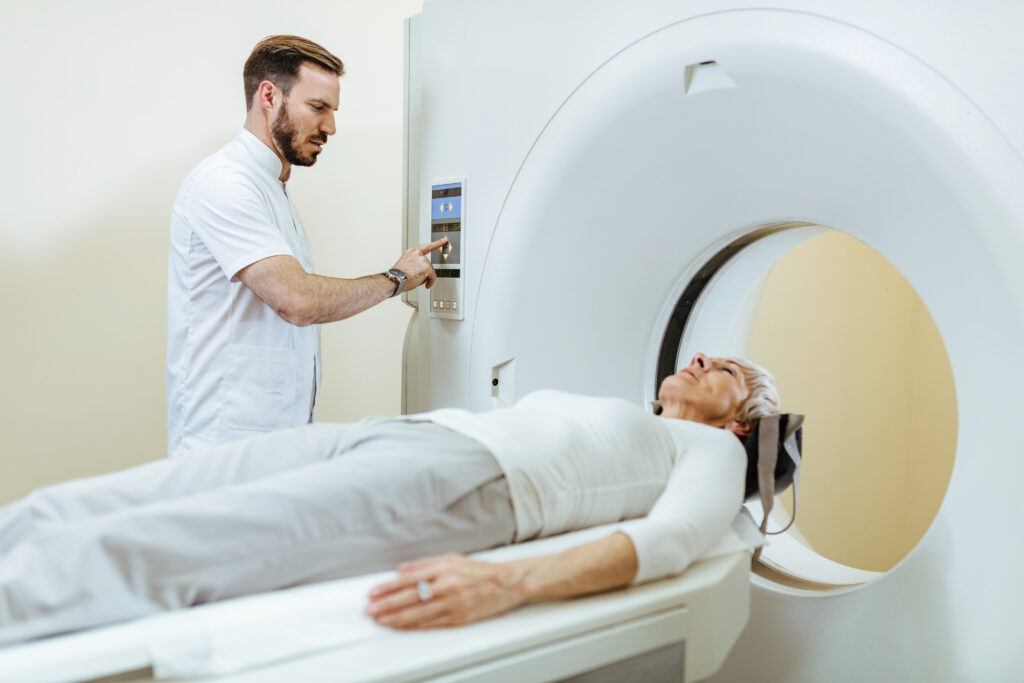
This is where advanced imaging, such as MRI, becomes essential to get a clearer picture of inflammation, tears, and internal joint damage that would otherwise remain hidden. Access to reliable MRI services in Manhattan enables physicians to obtain the detailed images necessary for accurate diagnosis and effective treatment planning.
At New York Sports & Joints, this clarity is enhanced by the Siemens Espree 1.5T MRI system. Its open, patient-friendly design reduces discomfort and anxiety during the scan while producing sharp, high-resolution images. Located in the heart of the city, this advanced technology helps physicians evaluate joint conditions with greater confidence and precision.
Blood Tests and Laboratory Work
Not all joint pain arises from structural damage, such as cartilage wear or ligament injury. In many cases, the source of discomfort lies in underlying medical conditions that affect the body's response to inflammation. This is where blood tests and laboratory work become an important part of the diagnostic process.
Doctors use blood tests to measure inflammatory markers that indicate whether the body is experiencing systemic inflammation. These markers can indicate autoimmune conditions such as rheumatoid arthritis, in which the immune system mistakenly attacks the joints.
Laboratory work can also help identify metabolic disorders such as gout, which occurs when uric acid crystals accumulate in the joint and trigger sudden, intense pain. In some cases, infections or other medical conditions may be revealed by testing.
Why Similar Symptoms Can Mean Different Problems
Joint pain can be misleading because similar sensations may come from very different sources. Two people may describe the same knee discomfort, yet one might be experiencing cartilage breakdown while the other has a torn ligament or an inflamed tendon.
Without proper imaging, testing, and evaluation, it is easy to mistake one condition for another. Treating both patients with the same method could delay recovery, worsen the problem, or fail to address the real cause of pain. This is why doctors rely on multiple diagnostic tools to build a complete picture before deciding on a treatment plan.
Conclusion
Joint pain should never be treated based on guesswork. A thorough diagnostic process helps doctors identify the true source of discomfort so treatment can be precise and effective. With the right evaluation, patients can relieve pain, maintain mobility, and support their joint health for the long term.