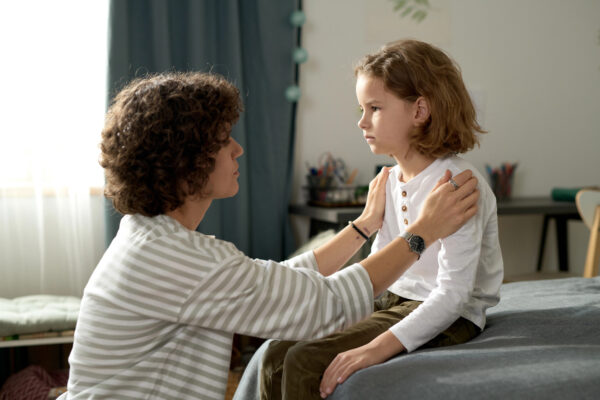
You know that quiet worry that taps you on the shoulder? Perhaps it is the fifth morning in a row that socks cause a meltdown, or your child remains composed all day, only to unravel the second they get home. Kids are an avalanche of changing moods and feelings, just like adults; they have big feelings, but don’t yet know how to hold, channel, or express them in different ways. They go through many phases, and some days it can feel like nothing seems to fit right, no matter what you try. The tricky part is determining when it is still normal development doing its lumpy thing and when your child might be struggling in a way that requires more help. A helpful rule of thumb is that typical bumps usually shift. A child might go through a week of hating loud noises, refuse baths for a fortnight, or cling at drop-off for a month, then settle as they adjust. What feels different is when the same issue appears most days, persists for weeks or months, or intensifies instead of easing. It is essential to pay attention to what your child is telling you through their body language and behavior. It's also important to try to regulate yourself and your emotions during tough moments with your kids, this 5 minute nervous regulation exercise is a good thing to try when you need a moment to rebalance yourself.

Look for Patterns, Not One Rough Afternoon
Is this happening often, even on “good” weeks? Is it cropping up in more than one place, such as at home, school, and clubs? Is it stopping your child from managing everyday routines? One bad day after a late night is one thing. A repeating cycle that derails mornings, meals, sleep, or outings is another.
Sensory Reactions That Keep Shrinking Their World
Sensory needs may seem small from the outside, but they can feel huge to a child. You may experience gagging at certain food textures, a refusal to wear clothes with seams or labels, panic around hand dryers, or tears in busy places. Or the opposite, a child who constantly seeks movement, crashes into cushions, chews sleeves, or spins because their body is chasing a feeling of “just right.” If these reactions are regular and make daily life a battle, it is a good reason to ask for support. It's also important, as a parent, to learn to stay calm when your child won't listen.
When Behaviour Is Really Overloaded
Sometimes behaviour is your child’s alarm system going off. Frequent meltdowns, hitting, biting, running off, freezing, or refusing simple tasks can be signs they are overwhelmed, not “naughty.” Look at what happens right before the blow-up. A sudden change, a noisy room, scratchy clothes, hunger, tiredness, or a fast transition can push a stressed nervous system over the edge. Support can help you identify and address these triggers and build a plan that aligns with your child’s unique nervous system.
A Quick Note on Stimming
You might notice repeated movements or sounds such as flapping hands, rocking, humming, tapping, chewing, or pacing. The stimming meaning, in simple terms, is self-stimulatory behavior that helps some children regulate their bodies and feelings when they are excited, anxious, bored, or overwhelmed by sensory input. It is common in autistic children, but also shows up in ADHD, anxiety, and in plenty of children without a diagnosis.
Organisations like Lighthouse Autism Center describe stimming as a coping tool, not something done for attention, which can be a reassuring frame if you are seeing it in your own child.

When Stimming Is Fine, and When It Needs Management
Most stimming is harmless and beneficial to your child as a coping mechanism; you don’t need to stop it just because it looks unusual. However, support is worth seeking if the behaviour is unsafe, like head banging that causes injury, chewing that breaks skin, or running into danger, or if it is so constant that your child cannot take part in learning, play, or family life. The goal is not to erase it, but to understand what need is underneath and find safer ways to meet it.
When It Shows Up Everywhere
Another clue is consistency across settings. If school is reporting the same struggles you see at home, or grandparents and clubs are noticing similar overwhelm, that shared picture matters. Children can cope in one place and fall apart in another, so observing patterns across environments helps confirm that something real is happening.
Who To Talk to First
You can start with your GP, health visitor, or school SENCO. If sensory triggers are central, an occupational therapist can assess how your child processes touch, sound, movement, and body awareness, then suggest practical changes for home and school. If anxiety, constant distress, or aggressive behaviour feels like the bigger issue, a child psychologist or behavioural therapist may be the right first door. Many services will help without needing a formal diagnosis.

Make the First Conversation Count
Before you book anything, jot down a few specific examples. Nothing fancy. Note what happens, when it happens, what sets it off, and what helps. “Refuses trousers with seams every morning” or “covers ears and cries in assembly” gives a more precise starting point than “hates clothes” or “gets overwhelmed.” A two-week snapshot is usually plenty to show the shape of things.
Seeking Stimming Support
Seeking support is not a sign you have failed, and it is not a rush to labels. It is a practical step when the same sensory and behavioural struggles keep disrupting your child’s days or making family life tense more often than not. If your gut keeps nudging you, trust it. Ask questions early, bring real-life examples, and seek help that makes your child feel safer in their body and calmer in the world.