The decision to start homeschooling your preschooler is often met with a whirlwind of emotions. There’s the sheer joy and excitement of crafting a personalized learning experience for your child, mixed with the inevitable pinch of anxiety: Am I qualified? Where do I even begin?
Let’s put that anxiety to rest. Homeschooling a preschooler is fundamentally different from homeschooling an older child. It’s less about rigorous academics and more about cultivating curiosity, establishing positive routines, and seeing the world as your classroom. Your primary job is to be a guide, a cheerleader, and a provider of opportunities—not a certified lecturer.
If you’re standing at the starting line feeling overwhelmed by curriculum catalogs and educational theories, take a deep breath. You don't need a perfectly color-coded schedule or a dedicated classroom wing. You only need a willingness to connect and three simple, practical strategies to make the start of your homeschool journey smooth, joyful, and sustainable.

Strategy 1: Embrace the ‘Hobby’ Approach (The 2-Hour Rule)
One of the biggest mistakes new homeschool parents make is trying to replicate a traditional school environment at home. For a preschooler—whose attention span is measured in minutes, not hours—this is a recipe for frustration for both of you. Instead of scheduling "School Time," adopt the mindset that learning is a fun, integrated family hobby.
The 2-Hour Rule is simple: limit "formal" learning activities to a cumulative two hours spread across the entire day, and always stop when the child’s interest wanes, even if it’s before the two hours are up. Remember, "formal" means any focused activity like sitting for a read-aloud, working on a puzzle, or coloring a worksheet.
The majority of your child’s learning will happen organically during the other 10-12 hours they are awake. Embrace "life learning," where everyday tasks become educational opportunities:
Kitchen Math: Baking cookies is a lesson in measurement, fractions, and sequencing.
Nature Science: A simple walk in the park becomes a biology lesson when you discuss tree types, count squirrels, and observe the weather.
Practical Life Skills: Letting your child help unload the dishwasher (sorting), match socks (visual discrimination), or sweep the floor (motor skills) builds focus and responsibility more effectively than a workbook ever could.
By shifting your perspective, you eliminate the pressure of a rigid schedule. You are simply engaging in life with your child, and education is the happy byproduct of that engagement. When learning is a hobby, it never feels like a struggle.
Strategy 2: Curate Your "Learning Environment" (The Rotating Basket System)
While the entire world can be your classroom, having a designated space for intentional learning helps establish a routine and signals to your child that it’s time to focus. Crucially, this space doesn't have to be a spare room—it can be a corner of the kitchen or a designated shelf in the living room. The key is in curation, not size.
Preschoolers thrive on novelty and order. A space crammed with 50 toys is overwhelming and leads to shallow play; a space with three carefully chosen activities leads to deep, focused engagement.
Implement a "Rotating Basket System" to keep the environment fresh and exciting:
Identify 6-8 core learning themes: Fine motor, sensory, letter work, number work, art, building, practical life.
Create "Baskets": Prepare small bins or baskets for each theme. For example, the Fine Motor Basket might contain tweezers and pom-poms, play-doh, and lacing cards.
Rotate Weekly: Only keep 3-4 baskets accessible on the shelf at any one time. The others go into a closet. When you rotate them out weekly, the "old" materials feel new again, sparking renewed interest.
This strategy teaches your child that their learning resources are valuable and finite, encouraging them to treat the materials with respect. It also simplifies your planning, as you only need to refresh a few baskets each week, rather than manage an entire playroom.
As your child grows and you look for resources that go beyond simple skill-building to incorporate foundational principles of self-governance and liberty, you’ll find great options available. For example, the materials offered by the Tuttle Twins are designed to introduce big concepts like freedom and economics through engaging stories and workbooks specifically tailored for young minds, giving you an excellent starting point for values-based education. Having quality resources that align with your goals will make your curated environment even more effective.
Strategy 3: Prioritize Connection Over Content (The Joy Metric)
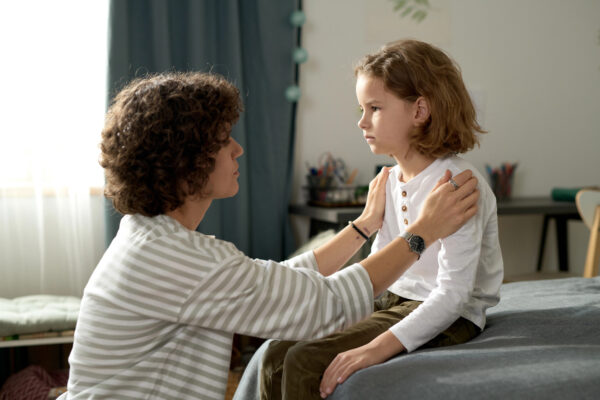
It is easy to get caught up in the comparison trap. You might see other homeschool parents posting perfectly executed crafts or advanced reading progress online and start stressing that your child isn't "keeping up." Stop. The most critical, foundational component of a successful preschool homeschool experience is connection.
A child who feels safe, loved, and connected to their parent is a child who is ready to learn. A child who is stressed, frustrated, or rushing through a lesson to please an anxious parent is a child whose brain is in "fight or flight" mode, which actively shuts down higher-level learning.
Use The Joy Metric as your ultimate measuring tool:
If your child is crying, struggling, or resisting for more than a minute, stop the lesson. The content is less important than the relationship. Put the book away, offer a hug, and pivot to a completely different activity (like a walk or building blocks). You can always return to the content tomorrow.
Focus on the process, not the product. Did your child try to grip the pencil correctly? That’s a win. Did they try to count the blocks, even if they skipped a number? That’s a win. The final, perfect coloring page is irrelevant; the effort, curiosity, and shared joy are everything.
By prioritizing your relationship and your child's emotional state, you are building a positive association with learning that will last a lifetime. You are teaching them that learning is not a source of stress, but a cooperative, happy journey you take together. This is the single greatest advantage a homeschool parent has over a classroom environment.
Conclusion: A Joyful Beginning
Starting your homeschool journey with a preschooler is a powerful and rewarding step. You have the freedom to design an education that perfectly fits your family’s needs and your child’s unique personality.
Don't overthink it, and don't try to make it look like "school." Instead, focus on these simple strategies. Start small, celebrate every tiny victory, and remember that you are the expert on your child. The most important lesson you can teach them right now is that learning is an adventure best shared.