
Modern parenting often involves juggling countless responsibilities, leaving little time to assign household chores to children. However, involving your child in age-appropriate chores can have far-reaching benefits. It not only lightens your workload but also instils valuable life skills, responsibility, and a sense of accomplishment. Let’s explore why giving your child chores is essential for their growth and development.

1. Building a Sense of Responsibility
Assigning chores to children teaches them accountability. Whether it’s tidying up their toys or helping set the dinner table, chores instil the understanding that everyone in the household contributes to its upkeep. This sense of duty prepares children for real-world expectations, where responsibilities are an unavoidable part of life.
When kids learn to manage tasks early on, they become more mindful of their actions and the consequences. For instance, understanding that failing to water a plant may cause it to wither helps them appreciate the importance of diligence and reliability.
2. Developing Essential Life Skills
Chores equip children with practical skills they will carry into adulthood. Activities like washing dishes, folding laundry, or organising their room are foundational skills they’ll rely on later in life.
More complex chores, such as cooking or managing a budget for household errands, teach problem-solving, time management, and even basic financial literacy. These experiences build confidence and foster independence, ensuring they can handle responsibilities as they grow older.
3. Strengthening Family Bonds
Chores are an excellent opportunity for family bonding. Working together on household tasks, such as cleaning the living room or gardening, allows families to spend quality time together. This shared effort creates a sense of teamwork and strengthens relationships.
Children feel valued when they contribute to family responsibilities, leading to a greater sense of belonging. Over time, this fosters mutual respect and cooperation within the household.
4. Boosting Self-Esteem and Work Ethic
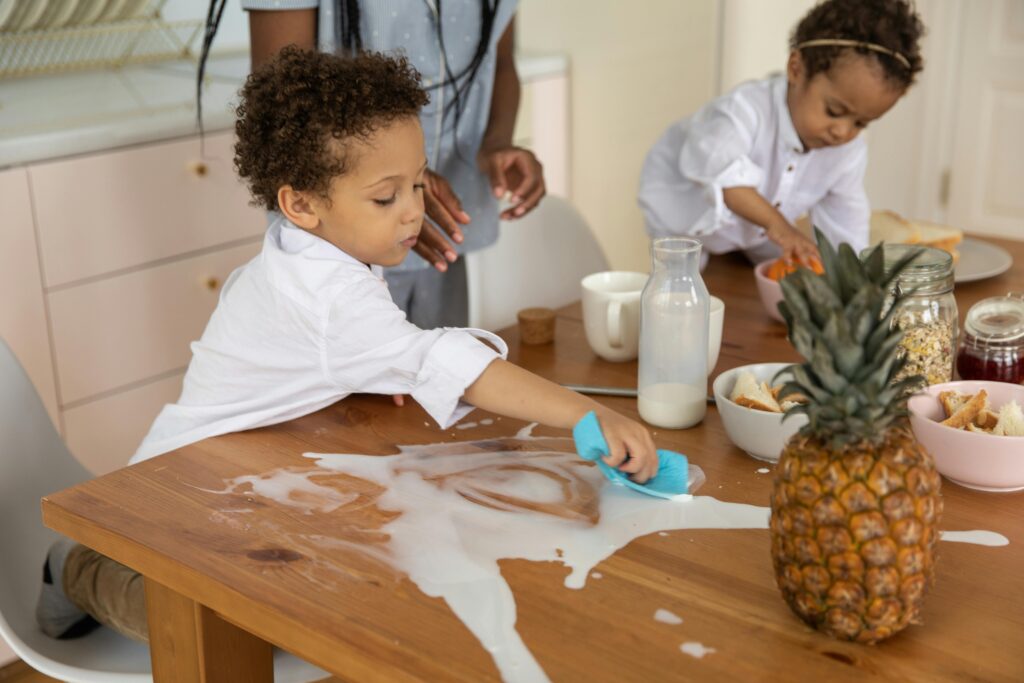
When children complete chores, they experience a sense of achievement, boosting their self-esteem. Simple tasks like feeding the pet or taking out the trash give them tangible results to be proud of. This positive reinforcement motivates them to take on new challenges with confidence.
Moreover, regular chores teach children the importance of persistence and effort. As they grow, these lessons translate into a strong work ethic, helping them excel in institutions like this independent prep school, hobbies, and eventually their careers.
5. Teaching Time Management
Balancing chores with schoolwork, extracurricular activities, and leisure time encourages children to develop time management skills. Assigning a schedule for tasks ensures they learn to prioritise and plan effectively.
Understanding how to allocate time for responsibilities while still enjoying downtime is a skill that will serve them well throughout life.
Age-Appropriate Chores for Children
Toddlers (2–4 years): Picking up toys, wiping spills.
Young Children (5–8 years): Setting the table, watering plants.
Pre-teens (9–12 years): Taking out the trash, doing laundry.
Teenagers (13+ years): Cooking meals, grocery shopping.
Giving your child chores is an investment in their future. It teaches responsibility, essential skills, and the value of hard work while fostering family bonds and boosting self-esteem. By starting early and providing age-appropriate tasks, you can help your child grow into a capable, independent, and confident individual.
So next time you consider tidying up alone, involve your child—it’s a step toward shaping their character and preparing them for life.