
Saving money can feel like one of those things we’re supposed to be good at, but rarely feel calm about. Between never-ending rising costs of everything (it's hard out there!), busy family life and the constant pressure to “do better,” even the idea of budgeting can feel overwhelming.

Over the years, I’ve found that the most sustainable way to save isn’t through strict rules or dramatic overhauls. It’s through small, gentle habits that quietly slot into everyday life. Money saving challenges, when chosen carefully, can be surprisingly easy. They give structure without guilt, progress without pressure and a sense of momentum that builds slowly over time.
If you’re looking for easy, simple and realistic ways to save, whether it be for Christmas, family days out, holidays, or just a little breathing room, these are some of the best money saving challenges to try. They’re flexible, family-friendly, and most importantly, easy.
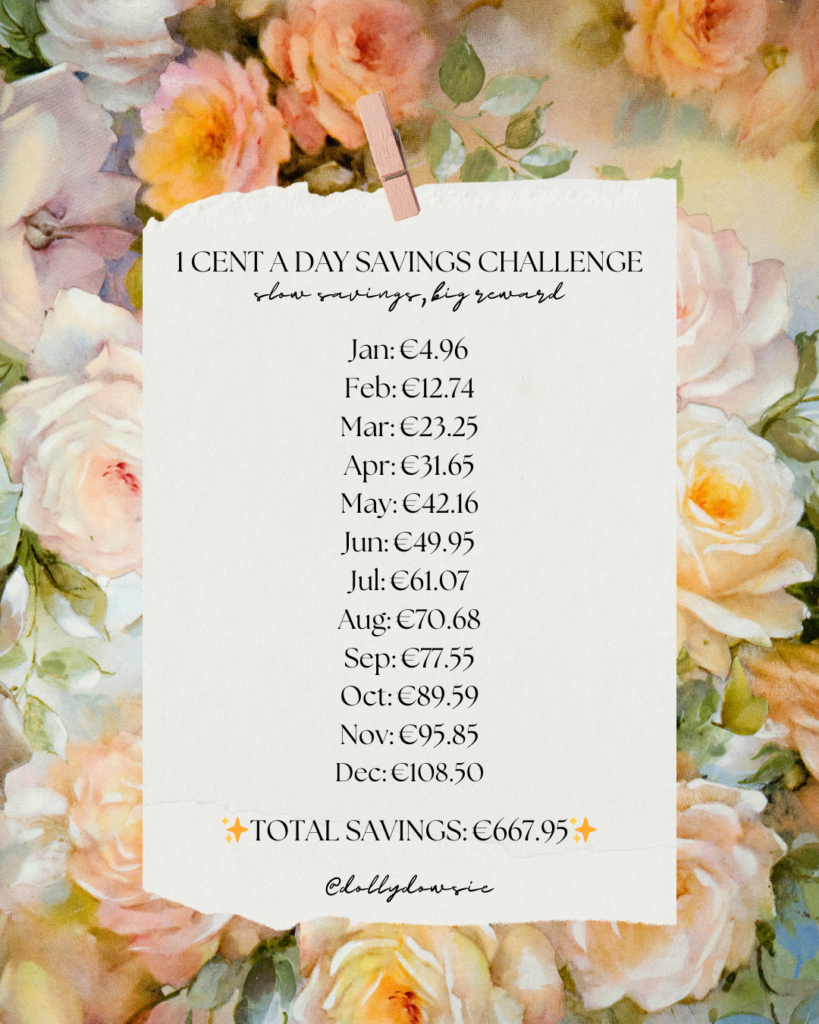
The 1 Cent a Day Savings Challenge
This is one of the most doable and easiest savings challenges out there, because it starts so small it almost feels too easy. On the first day, you save one cent. On the second day, two cents. Each day, the amount increases by just one cent. Compound savings if you will.
By the end of the year, you’ll have saved €667.95, without ever having to make a big, scary jump. The beauty of this challenge is how quietly it grows. In the beginning, you barely notice it. Later in the year, it feels genuinely rewarding.
This challenge works especially well for anyone who feels anxious around saving, or who’s been burnt by trying to do too much too quickly. It’s also lovely for families, because it can be done alongside daily routines, just popping coins into a jar or transferring a small amount digitally each day.
It’s proof that small habits, repeated consistently, really do add up.
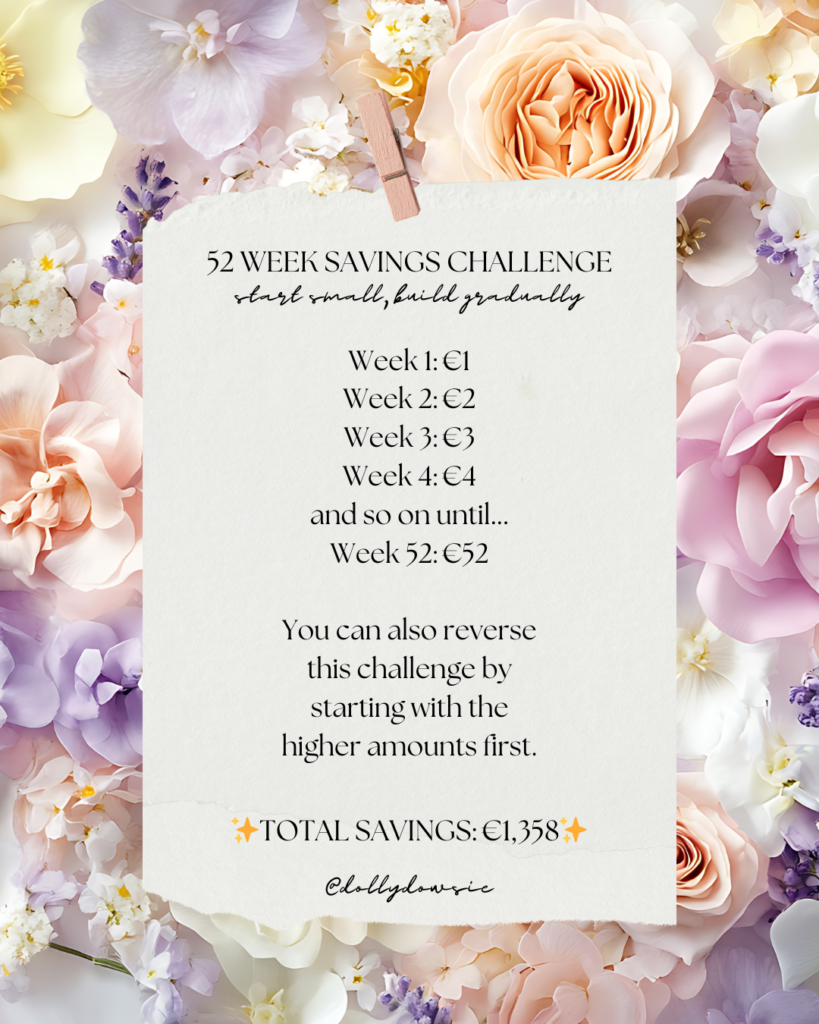
The 52-Week Savings Challenge
The 52-week savings challenge is a classic for a reason. Each week, you save a little more than the week before. You start with €1 in week one, €2 in week two, and continue building until week 52, when you save €52.
At the end of the year, you’ll have saved €1,378.
What makes this challenge so effective is its sense of rhythm. It mirrors how habits naturally form, starting off easy in the beginning, more committed as confidence grows. Watching the numbers increase week by week can feel incredibly motivating too, especially if you enjoy structure and clear progress.
For many families, this challenge works well when tied to a specific goal. Christmas, holidays, or an emergency fund all feel more achievable when broken down into weekly steps rather than one big number.
The Reverse 52-Week Savings Challenge
If the thought of saving €52 in December makes you wince slightly, the reverse version might be a better fit. This challenge flips the original structure on its head. You start with €52 in week one, then €51 the next week, gradually decreasing until you finish the year saving just €1 in the final week.
You still save €1,378, but the emotional experience is very different.
Many people find this version easier, particularly families who know the end of the year brings extra expenses. Getting the larger amounts saved early can feel like a huge weight lifted, allowing the rest of the year to feel lighter and more manageable.
It’s a great reminder that saving doesn’t have to look one particular way to be “right.”
The No-Spend Days Challenge
This challenge is less about saving specific amounts and more about awareness. You choose certain days, maybe one or two a week, where you spend nothing outside of essentials.
No-spend days gently highlight habits we don’t always notice. The extra coffee. The quick online order. The small purchases that slip through simply because life is busy.
For families, this challenge can be adapted beautifully. A no-spend Sunday with a walk, a film night or baking together often becomes something to look forward to rather than a restriction. Over time, the money saved tends to appear naturally, without conscious effort.
The €5 Note Savings Challenge
This is one of those challenges that feels almost playful. Every time a €5 note comes into your hands, you put it aside.
Because it doesn’t happen daily, it never feels demanding. And because it’s tied to something physical, it feels satisfying in a very tangible way. Watching a small stack of notes grow can be incredibly motivating.
This challenge works especially well for people who still use cash regularly, or who like visual progress. It’s also a lovely one to combine with a savings goal, such as family days out or seasonal treats.
The Spare Change Jar
The spare change jar is as old-fashioned as it is effective. Each day, you save loose change, or round up your spending and save the difference.
For families, this often becomes a shared habit. Children love contributing, and it gently introduces the idea of saving without any pressure or explanation. Over time, the jar fills almost without anyone noticing.
It’s a quiet reminder that saving doesn’t always need an app, a spreadsheet, or a perfect plan.
Pantry and Takeaway Challenges
Some savings challenges don’t involve moving money at all. Instead, they focus on reducing spending in areas that quietly add up.
A pantry challenge encourages you to use what you already have before shopping again. A takeaway-free month invites you to cook simple meals at home and save the money you would have spent.
These challenges are especially powerful for families because they often improve more than just finances. They reduce waste, encourage creativity, and bring a slower rhythm to everyday life.
Choosing the Right Money Saving Challenge for You
The most important thing to remember is that you don’t need to do all of these. You don’t even need to do one perfectly.
The best savings challenge is the one that fits into your current season of life. Something gentle will always beat something extreme. Something consistent will always beat something ambitious but short-lived.
If you're expecting a new baby or member to your family, this financial checklist for new parents is a great resource to read through and have at hand. It can help you save money by spending only on the essentials you need.
Saving money doesn’t have to feel heavy. It can be quiet, steady, and surprisingly reassuring.
Sometimes, it’s just about choosing one small habit and letting it grow.


