
You’ve switched cleansers. Ditched anything with fragrance. You’re guzzling water like it’s your new full-time job. And still, your skin doesn’t seem to care. Redness, dry spots, or breakouts keep popping up like they missed the memo. If that sounds familiar, you’re definitely not the only one.
Skin issues are rarely straightforward. And most of the time, it’s not about using more products. What makes a difference is knowing what exactly your skin is going through—and finding the right way to manage it. So, in this article, let’s take a look at five of the most common skin problems and solutions that actually work.
1. Acne
Acne is probably the one skin issue everyone’s heard of—and many still deal with it long after high school. It happens when pores get blocked with oil, dead skin, and bacteria. Throw in stress or hormones, and it gets worse.
What Helps:
Use gentle, non-comedogenic products (they won’t block pores). Harsh scrubs and drying soaps often make things worse, not better.
Try ingredients like salicylic acid or benzoyl peroxide. They help clear out pores and reduce inflammation. You’ll find them in many cleansers and spot treatments.
Keeping your hands away from your face is a simple but powerful habit. It stops bacteria and oil from spreading and helps prevent scars.
Quick Tip: If your skin feels dry after acne products, add a light moisturiser. Dry skin can still break out!
2. Eczema
Eczema shows up as dry, red, itchy patches. Sometimes, it stings or even cracks. It can appear on the arms, hands, face, or almost anywhere. What causes it? Often, it’s a mix of genetics, allergies, and a weak skin barrier. Even weather and stress can set it off.
What Helps:
Moisturise often. Use thick , eczema cream not light lotions, and apply them after bathing while your skin is still damp.
Fragranced products, wool, and hot showers can all make it worse. Stick with gentle, fragrance-free soaps and fabrics like cotton.
If your skin tends to flare after certain meals, you’re not imagining it. Processed foods, sugar, and dairy can all be triggers. So, try looking into some diet tips for eczema from dermatologists. They often share helpful advice in blogs or guides that focus on calming inflammation naturally.
If basic care isn’t helping, talk to a dermatologist. They can build a plan around your skin’s specific triggers and might suggest special routines that work better for you.
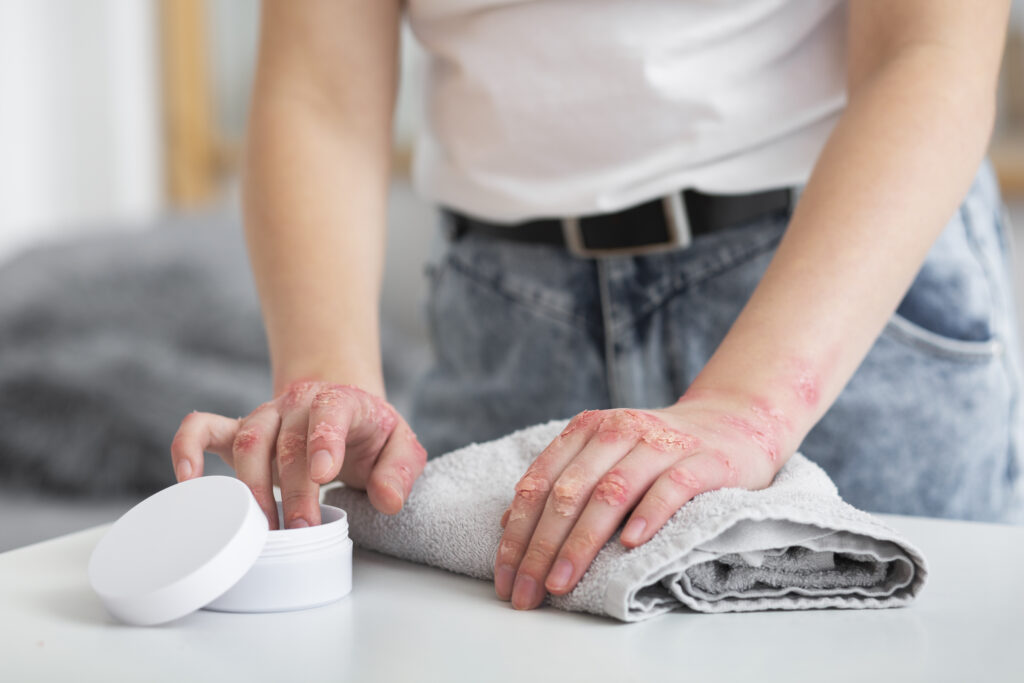
3. Psoriasis
Psoriasis isn’t just dry skin—it’s an autoimmune issue. Your body makes skin cells too fast, which leads to thick, scaly patches. These can itch, crack, and even bleed. It can show up on your scalp, elbows, knees, or lower back. Triggers include stress, cold weather, and even certain medications.
What Helps:
Start by using a thick moisturiser to reduce scaling and itching. Look for ointments or balms, not light lotions.
Topical treatments like corticosteroid creams are often used during flare-ups. For more stubborn cases, consider light therapy or oral medications to help slow down the skin cell build-up.
Stress can make symptoms worse, so sleep, rest, and support play a big part in keeping things under control.
4. Rosacea
Rosacea is tricky because it can look like acne, but it isn’t caused by clogged pores. It usually causes redness on the cheeks, nose, and forehead, and sometimes tiny bumps show up too. Hot drinks, spicy foods, and even sunlight can make it worse.
What Helps:
Simplify your skincare. Use gentle, alcohol-free products, and always apply sunscreen. Sun exposure is one of the biggest triggers, so protection matters all year round.
Prescription creams or gels can help with redness and bumps. In more severe cases, laser therapy can reduce visible veins.
Make a note of your personal triggers. Everyone’s skin is different, and figuring out what sets off a flare can help you avoid future ones.
Fun fact: Did you know rosacea affects around 16 million Americans? It’s more common in people with fair skin, but anyone can develop it.
5. Hyperpigmentation
Hyperpigmentation means dark patches or spots that stick around after pimples, sunburns, or skin injuries. It’s not dangerous. But it can be frustrating, especially when you feel like your skin just won’t even out.
What Helps:
Never skip sunscreen. Sunlight makes dark spots darker and slows down the healing process.
Look for brightening ingredients like vitamin C, niacinamide, or liquorice root extract. These work gently to fade discoloration over time.
Products with mild exfoliants like lactic acid or mandelic acid can help speed up skin renewal without causing irritation.
Avoid picking or scratching at healing skin—this causes more pigmentation and can take longer to fade.
Skin issues are frustrating, but you’re not stuck with them. Once you know what you’re dealing with, you can find treatments that actually work for you. And don’t be afraid to ask for help when needed, and be kind to your skin along the way.