
Do some of the walls in your home feel moist or wet? Are you finding that mould is growing or stains are appearing on them? Is your wallpaper or paint starting to peel off? Is there a musty smell in the room? If so, it’s likely you have a damp issue. But understanding what type of damp it is and what’s causing it, can be tricky.
That said, there are some common causes that are fairly easy to identify and once you’ve done this, it’s much easier to find a solution. Here are the three main types of damp and the reasons why they occur.
Rising damp
Rising damp is just as it sounds – it’s moisture that rises up from the ground. When a damp-proof course fails or hasn’t been installed, water can soak into brickwork, plasterwork and timber flooring, causing damage.
Sometimes a damp-proof course is in place but water is able to travel around this or ‘bridge’ it. Common causes for this are having raised beds placed against the wall of the house and placing new patios and driveways on top of old surfaces, so they sit above the damp-proof course.
Drainage issues can also cause rising damp. This can be hard to diagnose, but a sunken area at the base of a wall or water pooling outside your home can be an indicator of drain problems.
As you might expect, rising damp occurs on the ground floor of homes and you might see a white line of salts appear on the outside of your wall or a yellow or brown tide mark appear on the inside. You may also find rotten skirting boards and floor timbers and bubbling paint or peeling wallpaper at the base of the wall.
Penetrating damp
As well as coming from the ground up, moisture can travel through the walls from the outside. This penetrating damp typically comes from rainwater that’s made its way through cracks in render or mortar or has trickled down from blocked gutters or defective downpipes. Failed sills and seals around windows can also be a cause.
With penetrating damp, you might notice weathered bricks or a lot of algae growth on your external walls. Inside there may be patches of black mould appearing on your walls and you may find the walls feel wet or that wallpaper is peeling off in different places.
If penetrating damp is left for long enough, you’ll also notice that the plaster starts to crumble. If walls are plasterboarded, it may not be obvious there’s a problem at first but moisture can get trapped between the brickwork and boards, causing even more problems. However, even if you can’t see a problem, you may still be able to smell a damp, musty odour.
Condensation
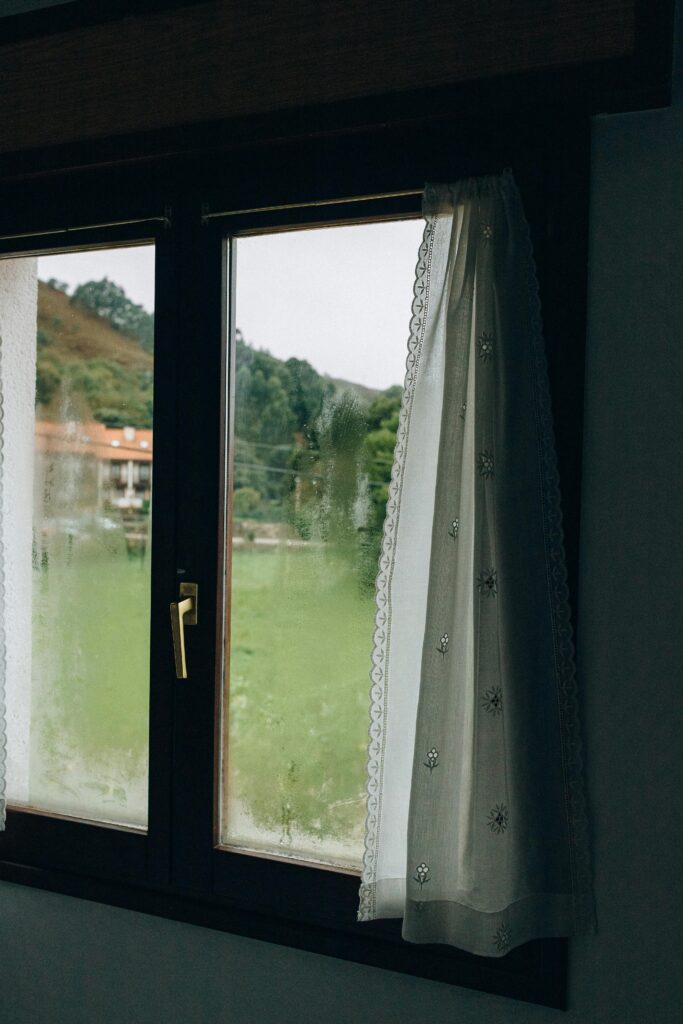
One of the most common causes of damp has nothing to do with water getting in from the outside. Condensation forms on cold surfaces when there is too much moisture trapped inside the home.
There are multiple reasons why moisture levels get too high but most are related to our modern lifestyles. It can be that steam from kitchens and bathrooms isn’t dealt with properly. This is easy to solve by installing efficient extractor fans in these rooms and taking preventative measures such as putting lids on pans and reducing time spent in the shower. Another cause is drying laundry indoors. If you can’t avoid this, it’s wise to open windows regularly or use a dehumidifier.
A third reason is poor ventilation. While insulating the home is a good move, you need to make sure there’s adequate ventilation to help air circulate – otherwise, moisture will get trapped in rooms. This will lead to walls feeling wet, windows misting up and mould forming in and around these places.
How to identify and solve damp problems
After reading this, you might still be unsure what’s causing your damp problems. The truth is, it might not be obvious where moisture is coming from. And there might be multiple reasons why your home is suffering from damp.
If this is the case, you’re best contacting a specialist to come and survey the inside and outside of your home. They can use their expertise and specialist equipment such as thermal imaging cameras and moisture meters to identify the issues and produce a report that includes the best and most cost-effective solutions for you.
This might mean installing a new damp-proof course, using penetrating and rising damp treatment options such as barrier or protection creams or it may be as simple as making some repairs to the outside of your home. The report may also include other helpful suggestions such as changes you can make to your wall coverings or improvements you can make to ventilation.